
The European Club
Pat Ruddy
The masterpiece of designer Pat Ruddy. A wonderful, brutal modern links course with wonderful views of Brittas Bay on almost every hole. A very stern test for golfers at every level



Ireland | Par 73 | 6833 Yards
Eddie Hackett & Daniel Steele
Course History
Enniscrone – also spelled Inniscrone and officially named Inishcrone (is a small seaside town in County Sligo, Ireland.
Enniscrone Golf Club opened in 1918, founded by a local group of golf enthusiasts. It was later extended t0 18 holes in 1930. It has become one of the most renowned courses in Ireland, having hosted many championships, and attracted golfers from all over the World.
Evidence of ancient settlement in the area includes a number of ringfort sites in the townlands of Muckduff, Frankford, and Carrowhubbock North and South.[8] The ruins of a fortified house, known as Inishcrone Castle and built c.1650, lie just north of the town centre.[9] The local Church of Ireland church was built c.1829,[10] and a Roman Catholic church followed in 1892.[11] The latter remained in use by the local Catholic congregation until a new church was built in 1965.[12]
Its stunning location on the Atlantic Coast, upgraded modern clubhouse facilities, and a commitment to preserving the legacy of the club’s founders, Enniscrone is a true gem in the World of Golf.
Course Review:
We arrived into the town of Enniscrone the night before and stayed right on the main road in town excellently for pub-crawling which we would do the next night after our round, with our impromptu host Padriac, the unofficial mayor of Enniscrone.
We had heard wonderful things about Enniscrone, including “the highest dunes in Ireland,” and “epic views” as well as “views upon views.” They were all right.
We were able to bump-up our tee time from the original 4:00 to just after lunch and had a bit of a window in between the rain—for the first 90 minutes, at least. It also gave us time for a well needed stint on the range, and I was able to fix a few kinks in my swing. In fact, the last three rounds we played in Ireland included practice ranges—not always a guarantee.
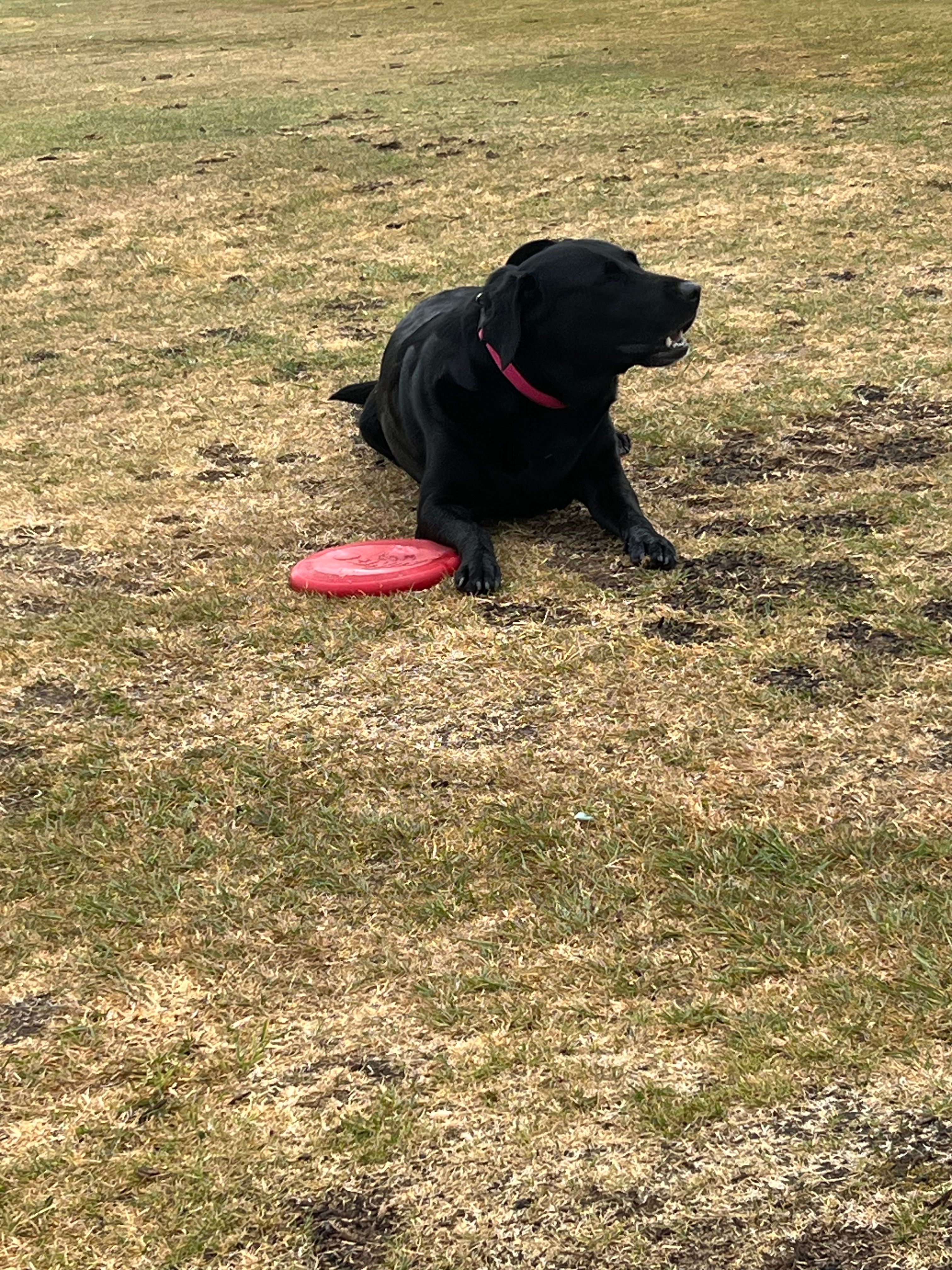
The last conversation I had before Scooter and I were on the tee, was with a black retriever that had a penchant for frisbees—golf was not his bag, rather frisbees. His Dad gave us a few pointers on the course and some of the holes.
We saw that a front was coming in right around our late afternoon tee-time, and we lucked out and were able to hit the 1st tee around 1:00pm after a good lunch and warm-up on the range. It would be our first experience of the famous Irish Mist, on this, our 10th round of the trip. It rained on and off for the first 90 minutes, but never more than a sprinkle—enough to try out our rain hats and gloves—they did us well.
The starter let us know that we would be playing behind the Aunt and Cousin of the LPGA star, Leona Maguire. We had conversations with her on few back-nine tee boxes when play slowed down. On the 13th, she showed us her torn and ripped rain gloves which she had only used twice. When I looked at them, they were shredded, and I noticed that I had the same brand—it is well known, and one of the two words is an appendage.
My comments that I wrote down, a la Gil Hanse’s comments printed on the tees which we received as a gift bag on the 1st tee at Castle Stuart:
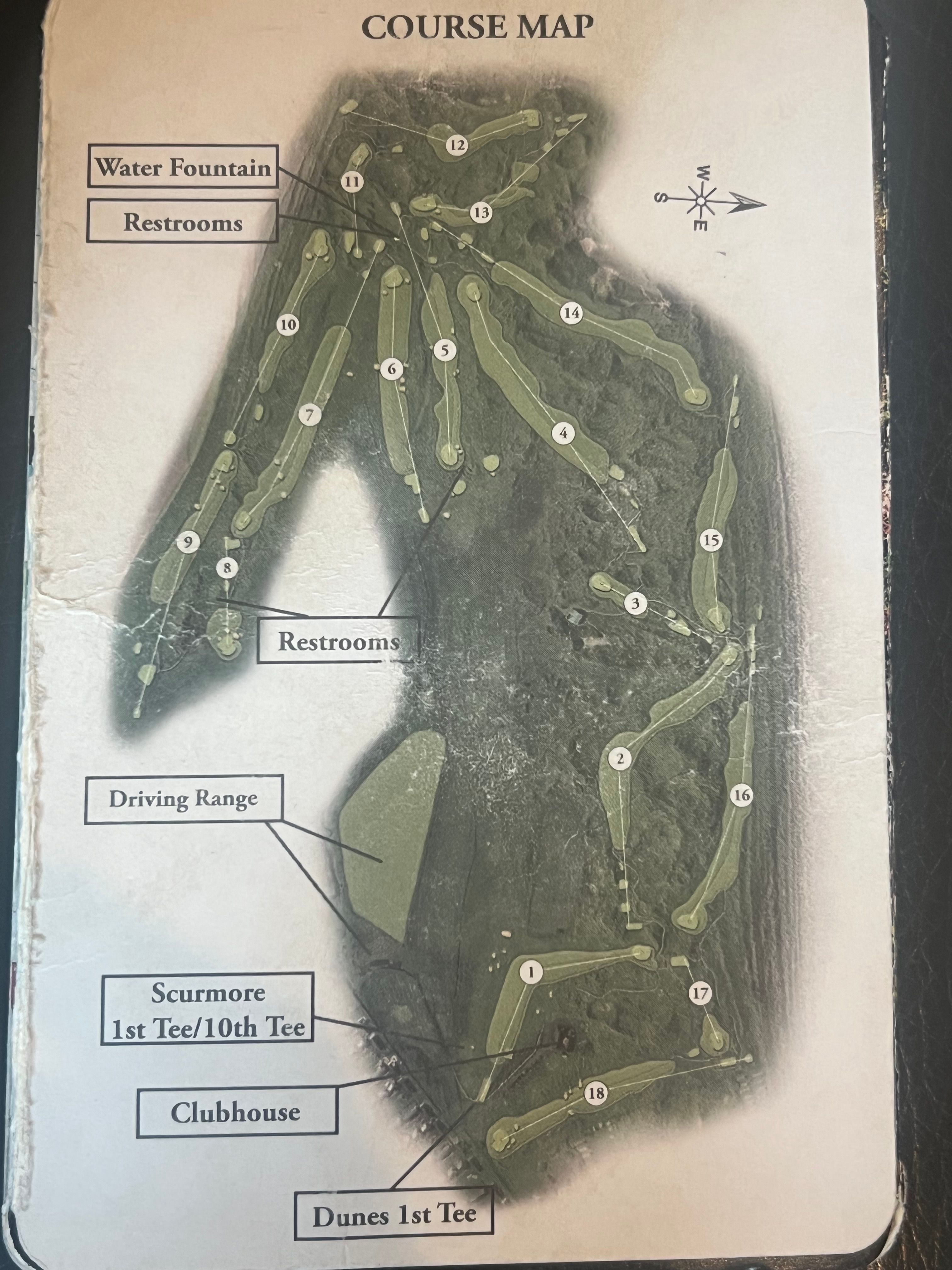
Although the great, tall dunes and amphitheater green complexes are what come to mind first, the unique routing is very key to the experience at Enniscrone. It is six holes deep from the Ocean, back the Strand. It has holes running in every direction, East to West, West to East, South to North and North to South. Numbers 1 & 2 run out toward the Atlantic—on the North side of the course—then #4 brings you back inland toward the Strand/Lagoon on the south side of the course. It is by no means a classic out/in links layout.
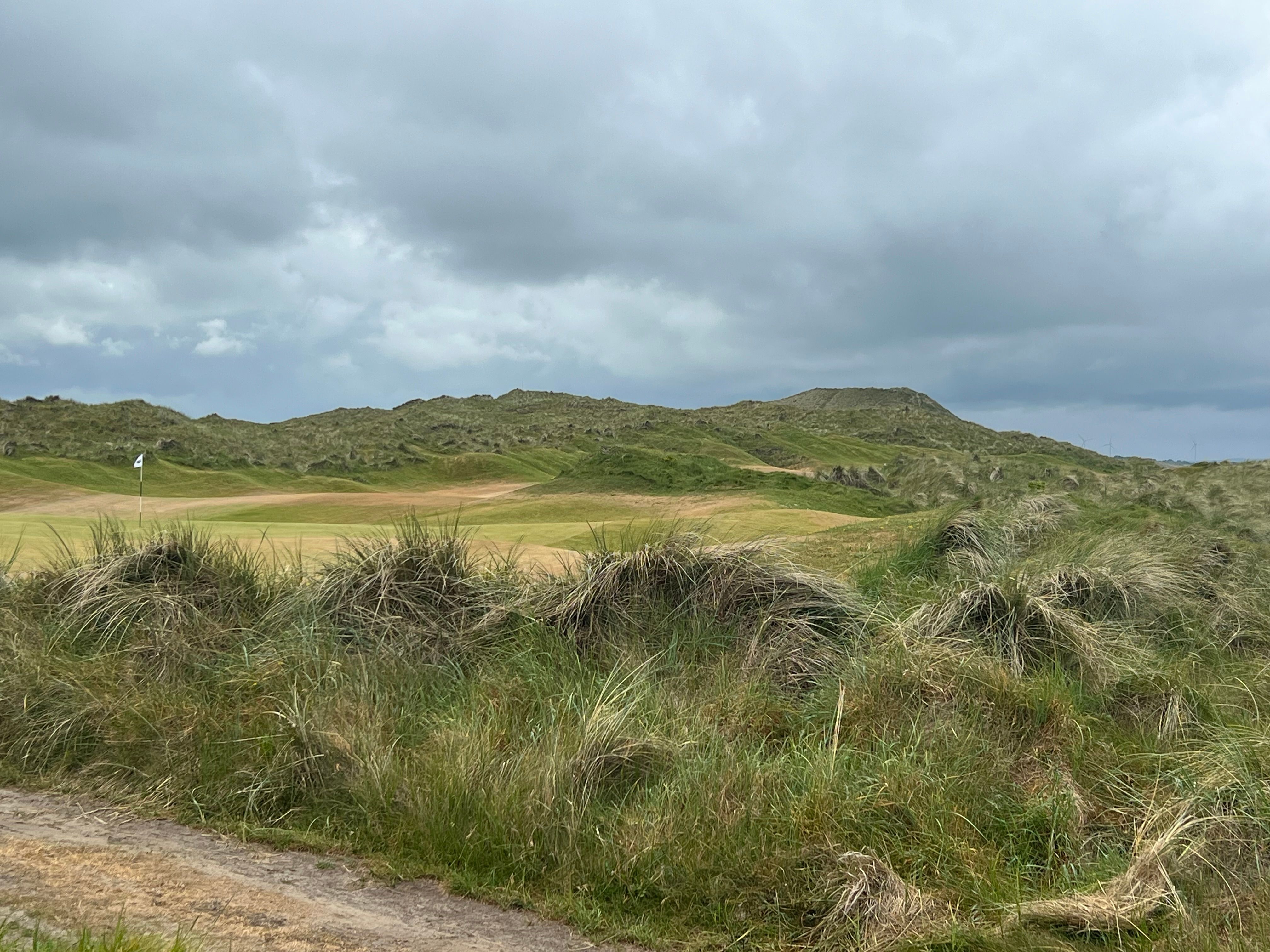
The front nine is a par-37 with three par-5’s and they all have character, and few bunkers I might add. Enniscrone is a splendid example of a links course that does not have an overabundance of bunkers, and the ones that it has are limited and strategically positioned around the greens—never more than two or three on a hole. Navigating your way through the dunes is the challenge, with fair green complexes where the defense is rumples and ridges.
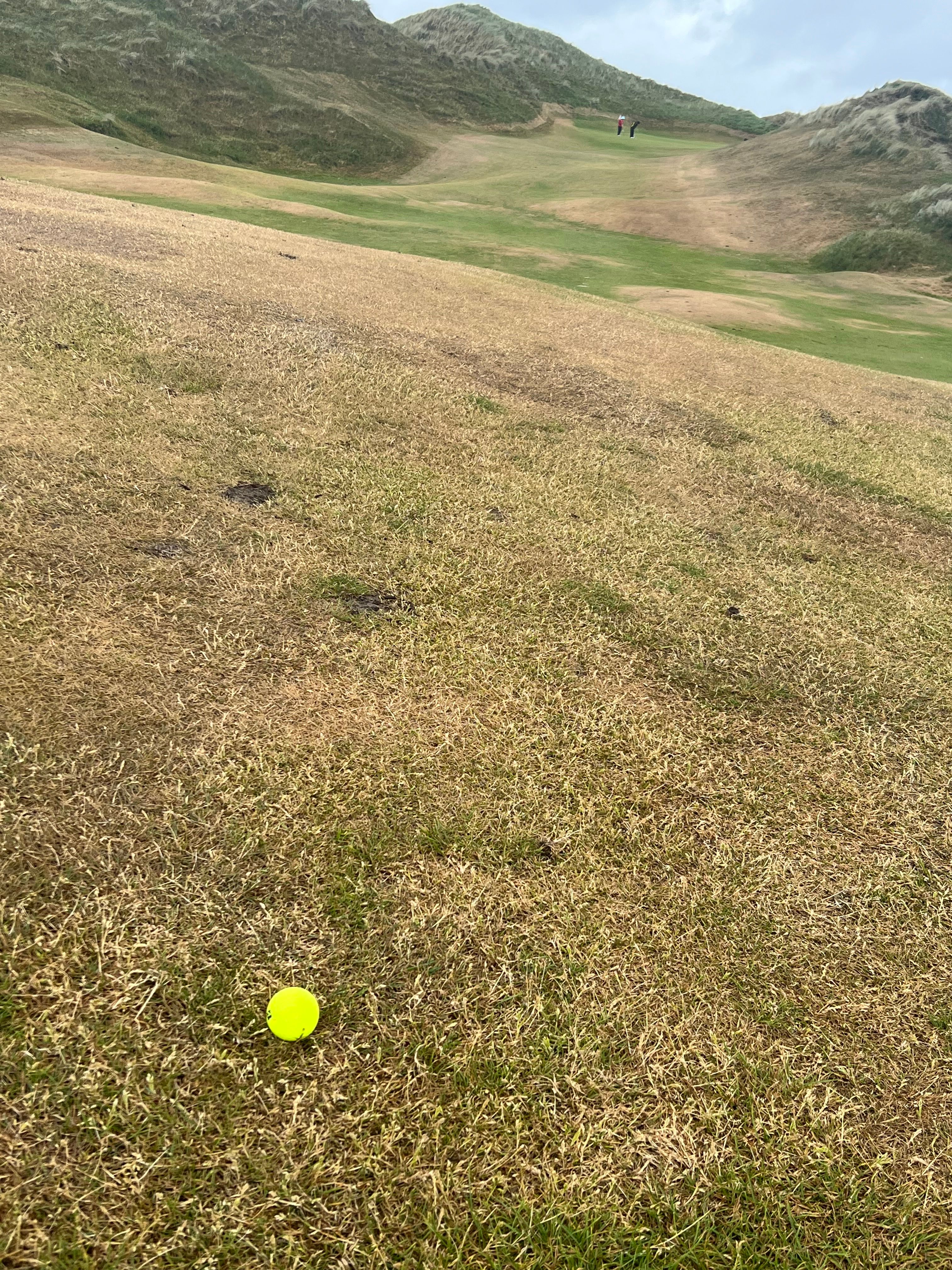
Number 2, Kilcummin, the first of the par-5’s, is 469-yard sharp dogleg right, where the fairway narrows up the hill to an infinity green suspended above the beach—I cannot recall it having any bunkers. Number 4, Nephin, is 518-yards, and uphill right to left off the tee around a huge dune. It then winds down and narrows to the green complex—again no bunkers needed. Number 7, Hacketts, the last of the par-5’s on the front, is wide-open, with no dunes defining the fairway. One single, tiny pot bunker lies up the left side near the landing area, and three diagonal, large pot bunkers cross right to left, about 60 yards short of the elevated green.
Number 5, Ox Mountains, is a 390-yard par-4, was my favorite on the front. It actually has three fairway bunkers and a burn that snakes around to the right side off the tee. The two pot bunkers on the left of the green bait you to go long where there is deep gorse to gobble-up your ball.
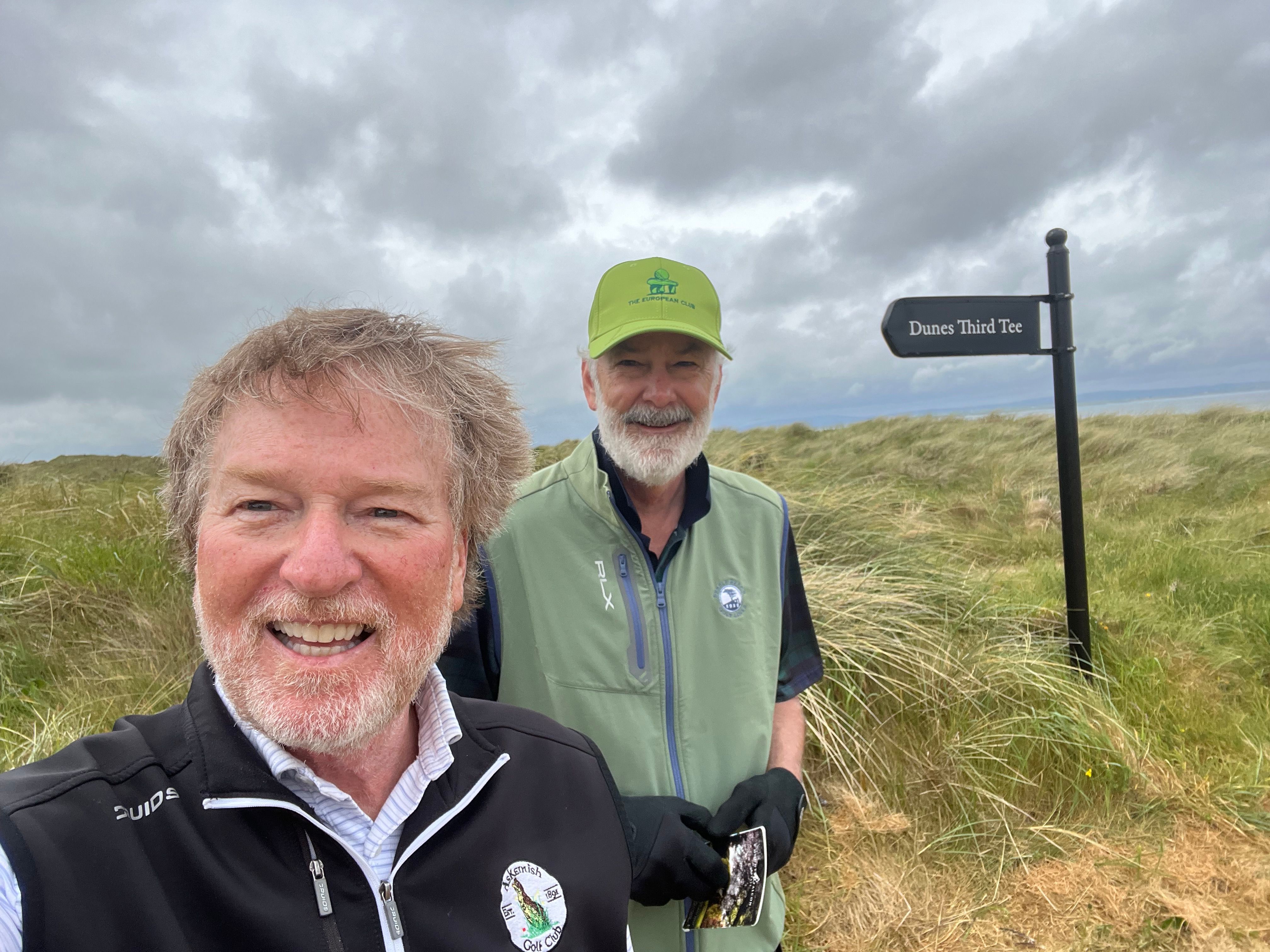
Holes 5 through 10 run parallel to each other on the inland side, with 9 and 10 running along the Strand. It is when you finish the par-3 11th, The Bar, and you approach the 12th tee, Cnoc na g Corp, where the course gets really interesting again, as you make your back into the dunes. It is this stretch of holes through to #17 that are the best, and most scenic dunes.
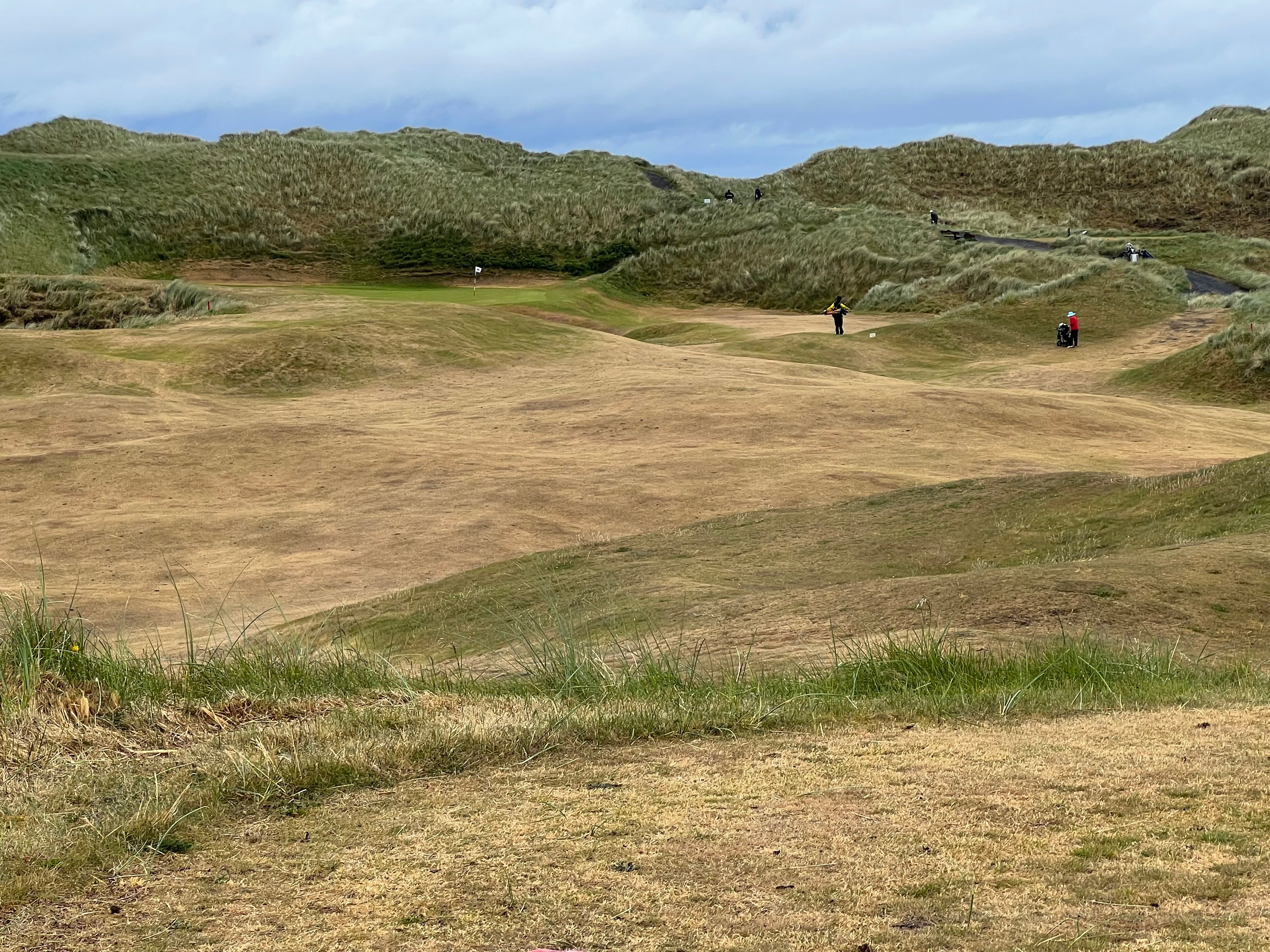
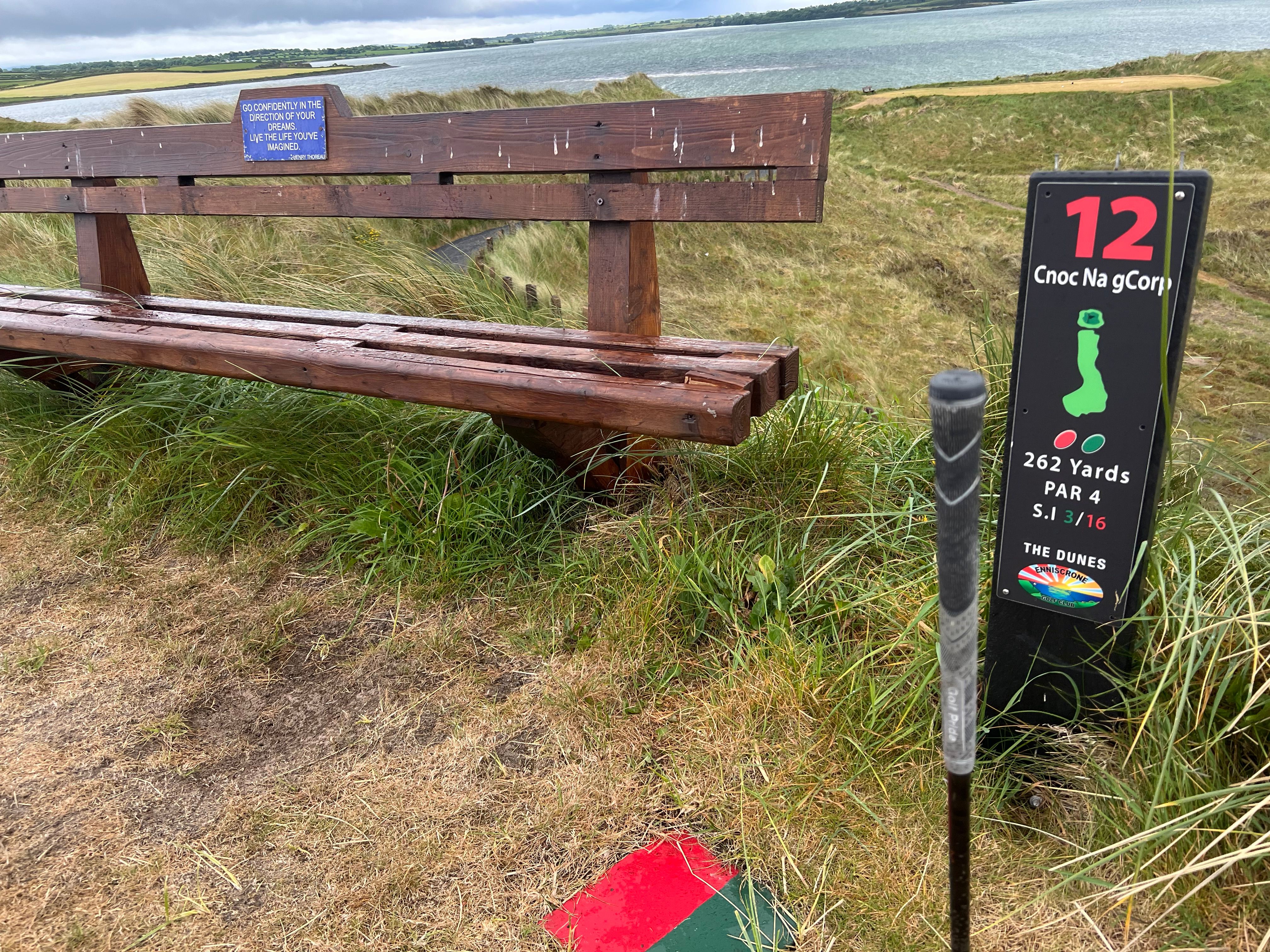
#12, Cnoc na g Corp (meaning hill of the corpses in Gaelic) was my favorite. We played it from the up-tees, at 262 yards, and the tips were 347. You simply bash a driver up the right side to an elevated, small green which drops off dramatically in front and left. It is a blind, up-hill tee shot from the back tees, then down the hill into the gully short of the green. A short 15-yard chip and putt gave me a well needed birdie.
#13, The Burrows, another fun short 272-yard par 4, has the highest tee box on the back. It flows downhill (toward the Strand) and doglegs right. You basically pick a line over the dune on the right side, and hope for the best as your ball makes its way through the roller-coaster fairway. Two bunkers, left front, and right rear guard the amphitheater green complex.
#14, Valley of Diamonds is a wonderful par-5, at 482-yards, and as its name suggests, it runs through a very narrow ‘valley’ between giant dunes and up the hill toward the Atlantic to an infinity green—with no bunkers.
#16, The Long Bank, the last of the par-5’s at 467, with the Atlantic and Beach to its left, has towering dunes flanking the right side all the way to the green complex The fairway turns right the last 80-yards to another elevated, bunker less green, sitting down in its own amphitheater.
#17, White Horses, ends-up my favorite stretch. A par-3 with an elevated tee shot over a field of dunes, gorse and swales to the green.
As we finished our putts and headed to the 19th hole, our thoughts were of how we had just done battle with Mother Nature and we were bone-dry.
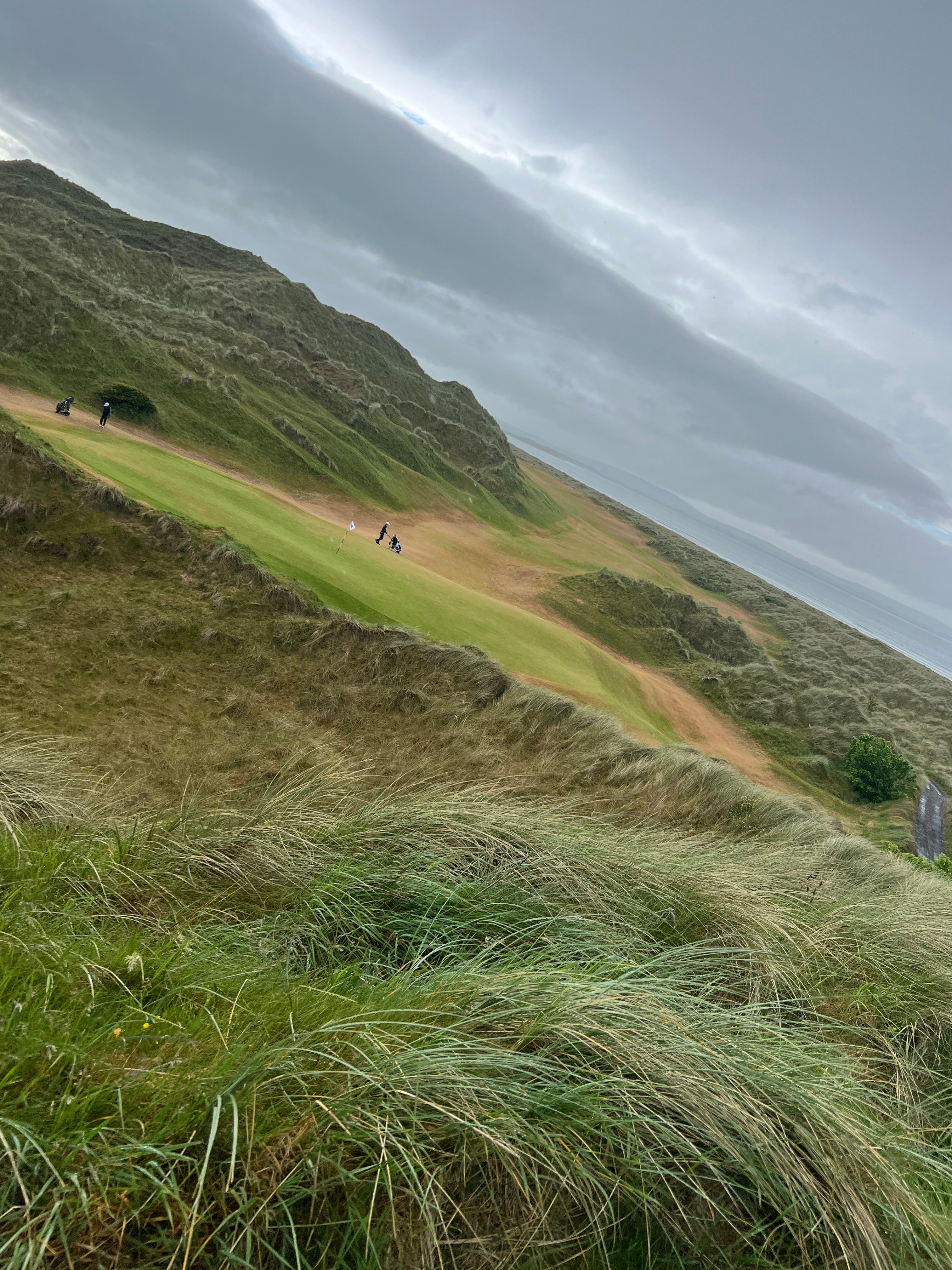
It had tested our new rain gear for the first time in Ireland. That, and our amazement with the towering dunes, and wonderful green complexes—easily in the top three in Ireland (St. Patrick’s and Ballybunion).
As we ordered our customary post-round Guinness. It took all of two minutes for the group of Irishmen at the end the bar to strike-up a conversation—we obviously stuck-out like a sore thumb. It must have been our Yankee dialect. One of the many things I love about playing golf in Ireland, is wherever we played, the members of the club loved to get feedback on their home course: likes, dislikes, where else we played, where we should play, and most importantly, will we come back?
Our answer was a resounding, "YES!”
We went back and forth for quite a while. Turns out that they were headed to the States for their bi-annual trip to South Carolina to play Succession Golf Club. A couple of them peeled off and headed home for dinner. Padraic (pronounced “Par ick”) was the most outspoken, and would invite us to meet him downtown and he would show us his favorite pubs. My favorite of his rapid-fire one-liners:
“Do you guys play ProV1’s? You should because we love to find them!”
What proceeded for the next few hours was the most off course, post round fun that we had in Ireland. Or what I like to refer to as The Enniscrone Hat Trick. We stayed at the Ocean Sands Hotel & Spa, on Main Street, and all a 1 KM walk to the entrance at Enniscrone Golf Club. It was a terrific location and just happened to be steps from many restaurants and pubs that lined a half mile stretch that defined downtown Enniscrone. We began our Pub Crawl with a left turn out of our hotel and one hundred feet away.
The first stop was Gilroy. We had dinner at the downstairs, ‘white tablecloth’ spot, French surf ‘n turf restaurant Ait Elie the night before. Scooter had the pan-Fried Hereford beef medallions (served on a piping-hot skillet) and I opted for the mussels and frites—se magnifique!
Little did we know how good the authentic, traditional pub upstairs was. As we came in and turned right to Gilroy, instead of left to Ait Elie, we simply rounded the corner turned left at the bar, and there was Padraic waiting with three bar stools—it was only a four-stool bar. He was chatting up the two young lasses behind the bar as we sat down.
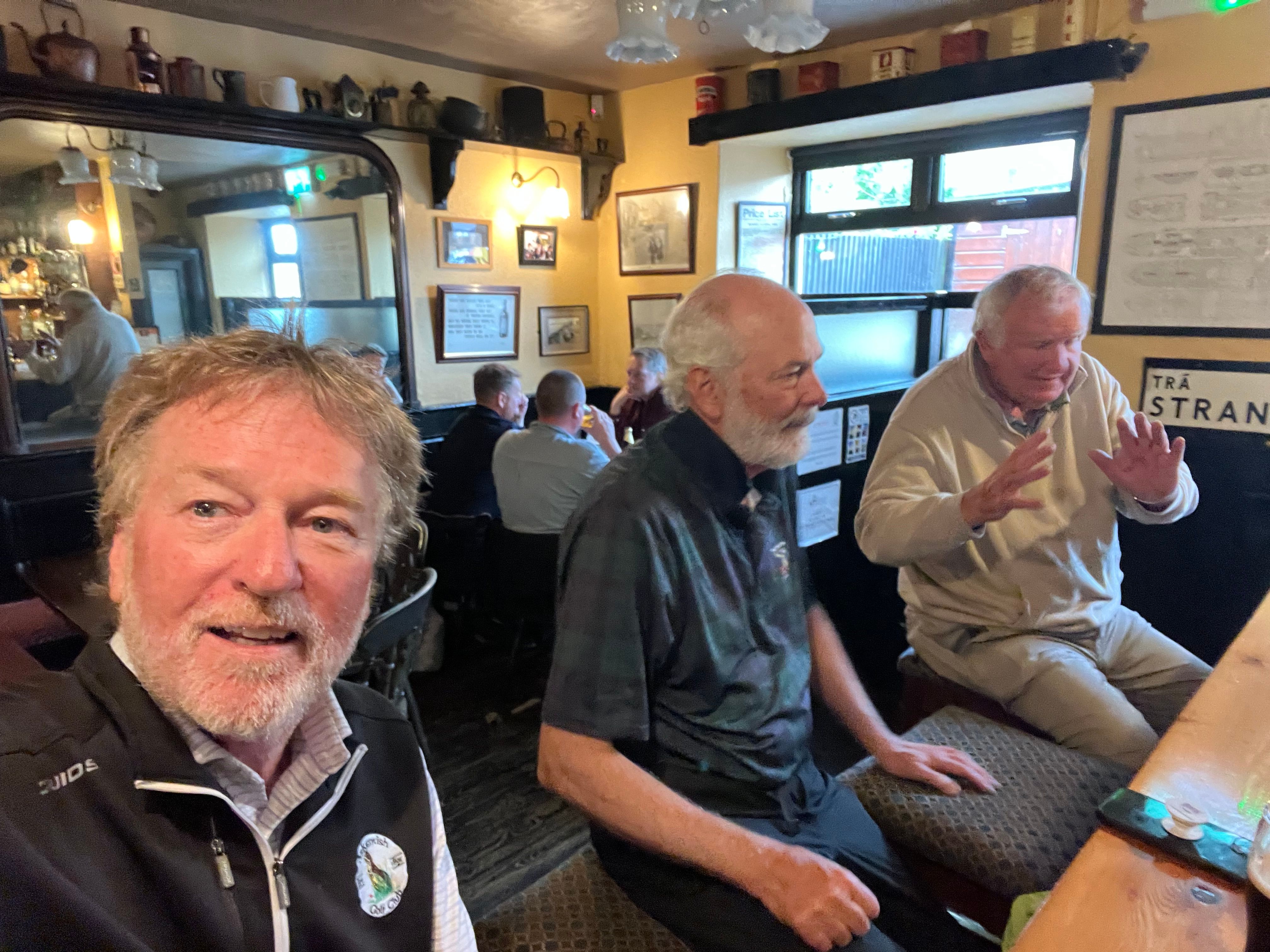
Padraic is the kind of guy that could make gobs of money as a tour guide for one of the many golf tour companies. Silver hair, warm smile, and a quick wit. He seemed to be part Italian, as he could not utter a sentence without using his hands. His soft, thick Irish accent topped it off.
He would not let us order anything other than the fish ‘n chips, which bode well with Scooter. They were fantastic and the second best of the trip, only to the Harbor Bar in Portrush.
This conversation centered around the two lasses at the bar, their sisters and friends, who is dating whom, and who moved out of town. It was a lot of quizzing by Padraic. He was certainly in an information gathering mode. It was his own old-school, analog version of Facebook. It was at this point that Scooter commented.
“You should run for Mayor, Padraic, you pretty much have the pulse on what’s going on in this town.”
“Oh no,” he replied, “I know too many people.”
As we finished our dinner, and he compiled as much information as he possibly could, we left for our next stop, all of one hundred feet away—on the same side of the street.
It was after the dinner hour, and the pub was rocking on this Saturday night. It was a larger pub, with a wrap-around bar, many tables and booths, and quite a few strategically positioned televisions. It was a Norm-entering- Cheers-like welcoming as we walked in. A few of Padraic’s friends waved him over to a large L-shaped booth in the front right corner of the pub. It had a strategic view of the large screen to the left, and bar next to it.
After a few introductions, and others coming over to harass Padraic, we settled in. Everybody was focused on a Gaelic Football telecast, and it was getting raucous. Almost like there were some serious wagers going on the bar. They all tried to give us a lowdown on the rules, and what was happening.
Gaelic Football uses a round ball (versus oval in rugby), allows hand-passing and requires players to bounce or "solo" (kick to their hands) the ball every few steps. It scores three points for a goal (under the bar) or one for a point over the bar-like a field goal in Football. The other difference seemed to be that it was not as violent, on the tackling as rugby, thus they did not wear as much gear and padding.
We enjoyed it, and I am looking forward to going to a live game next time we go to Ireland. The other thing I noticed was the impressive music that they played at Pilot Bar—from The Rolling Stones’ Gimme Shelter, Supertramp’s Take the Long Way Home, Fleetwood Mac, Steve Winwood, to Tom Petty’s American Girl, and The Band’s The Night They Drove old Dixie Down. It reminded me of when Scooter and I were at The St. Olaf in Cruden Bay, and a Rock ‘n Roll party broke out on a Friday night.
After a while, Padraic seemed gassed and was ready to head home. He suggested that we finish his pub crawl and go across the street to B. Hopkins for a nightcap. The streets were abuzz by this point, the sun was setting, and people were filling the sidewalks, enjoying Saturday night.
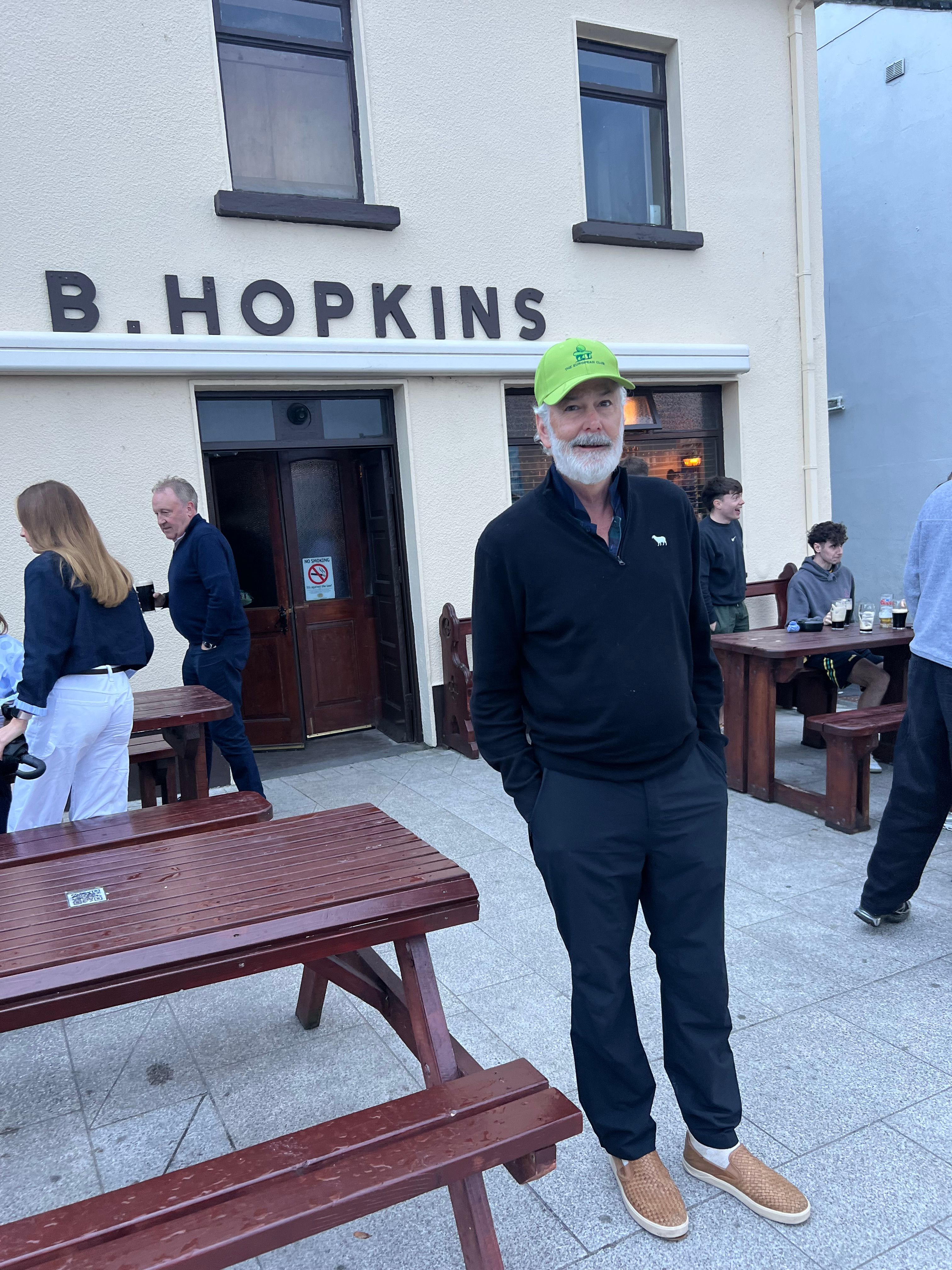
It was a smaller gathering spot than the others, with a front room and bar where everybody was standing, enjoying their cocktails and beer, but also had a nice front patio with picnic tables. We met an American couple on holiday, and shared our travels, and highlights on where to go. They were headed back North and over to Belfast and Dublin, where we had started our trip two weeks prior.
I later figured out why Padraic pointed us to this pub. Rumor has it that Hopkins is a highly rated traditional pub in the travel circles and famous across Ireland for its exceptionally well-poured pints of Guinness, often considered among the best in the country. The only other time I had heard this was from an Irishman (James, our driver in Dublin/Malahyde, who was a member of The Island Golf Club) telling us about Jack White’s Pub. It is near Brittas Bay, south of Dublin, and was nicknamed The Widow Bar, after the owner was murdered by his wife.
As we finished our whiskey’s, we thought we would head next door to the gelateria, but no go. What? On a Saturday night? Oh well, the Irish must be morning and early afternoon gelato-consumers, just like the Italians. Next time.
We put our trust in Padraic, and he delivered. That has been the motto that I live by. When in a foreign Country, rely on the locals to guide you to the right places--they want you to enjoy their turf! Do yourself a favor and try out The Hat Trick the next time you are in Enniscrone or anywhere near County Sligo.
Course Rating: A Resounding Eagle – do not miss it!

#17 White Horses

Pin and Flag

Ozzie, Official Frisbee Caddie of Enniscrone

Ireland Links Courses love Dogs

2nd Leg Enniscrone Pub Crawl
— COURSES —
More incredible links courses from Ireland
Pat Ruddy
The masterpiece of designer Pat Ruddy. A wonderful, brutal modern links course with wonderful views of Brittas Bay on almost every hole. A very stern test for golfers at every level

Harry Colt
A modern-day host on the Open Rota, Royal Portrush is a top-20 course in the World. An absolute must to play. Both challenging and beautiful, with gorgeous views and a great walk. It was named after the Dunluce Castle just down the beach where The Lords of Antrim lived centuries ago.

Original (9) Holes: Lionel Hewson, re-design: Tom Simpson
Ballybunion opened in 1893, laid out by golf writer Lionel Hewson. The club battled early media and financial issues, grew to 18 holes in 1926, and saw minor redesigns by Tom Simpson in 1937.