
Enniscrone Golf Club
Eddie Hackett & Daniel Steele
A wonderful links course in County Sligo, on the Atlantic Ocean. It has the tallest, most wonderful dunes in all of Ireland




Ireland | Par 71 | 6930 Yards
Tom Doak
Course History:
Brothers Frank Casey, Jr. and John Casey are the second generation of the Casey family to run the Rosapenna resort in Downings, Donegal. They are following in the footsteps of their parents, Frank, Sr. and Hillary who purchased the property in 1981.
Rosapenna has a long history as a resort, as the original hotel, built from Norwegian-pine timbers, opened in 1893. The original course was designed/laid out by Old Tom Morris. At the time, it was thought to be the first true golf destination resort. When Harry S. Colt and his business partner, Charles Allison arrived in the 1920’s to further develop the original courses, he had this say about resort:
“It is difficult to write with restraint about Rosapenna. The exceptional beauty of the surroundings is liable to interfere with unbiased criticism.” – Harry Colt, 1927
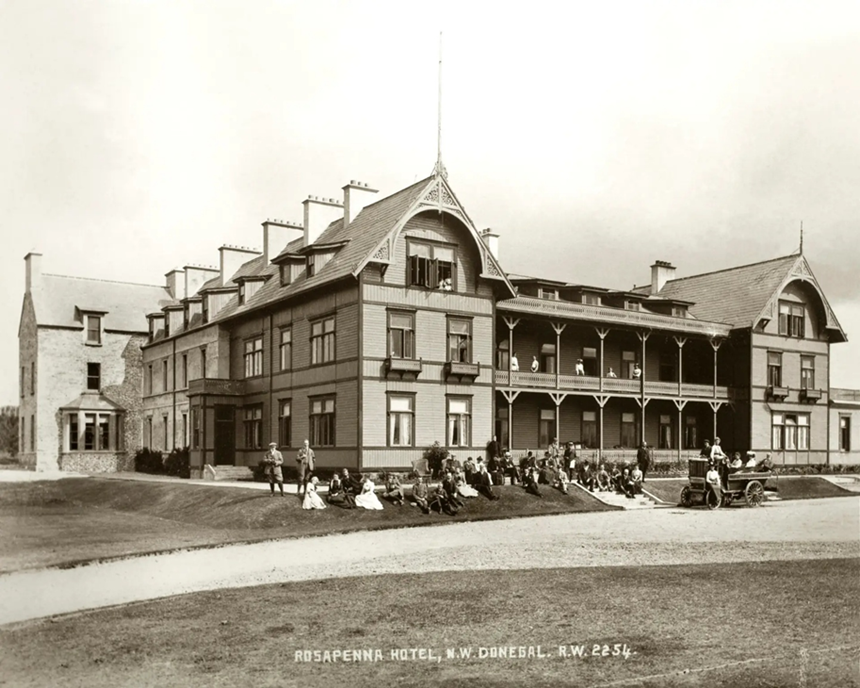
The original hotel/structure burnt down in the early 1960’s, and its replacement, the Rosapenna Hotel was promptly rebuilt and the whole property was subsequently purchased by Frank and Hilary Casey in 1981. Frank had worked at the old hotel on his school holidays. The property south of the two courses at the time--Old Tom Morris and Sandy Hills--was originally purchased and developed by the Walsh family, and two additional courses were designed by Irishman Eddie Hackett (The Magheramagorgan Links) and PGA Professional Joanne O’Haire (The Trá Mór Links) and both opened for play in the mid-1990’s. In the early 2000s a development firm purchased the property and commissioned Jack Nicklaus’s firm to do a redesign of the two courses. Work began, but the project was abandoned shortly after due to the developers' financial problems during the 2008 real estate collapse. The site laid dormant for several years.
Then along came the Rosapenna Golf Resort (an intimate group of founding members including the Casey brothers and Tom Doak’s Renaissance Golf Design) to acquire the property/and existing courses in late 2012. Construction began in April 2018, with all the greens completed in 2019 to ensure that they were mature and at their best from opening day. But due to delay from the Covid-19 pandemic, and restrictions on travel, all the final changes were conducted in 2020.
Tom Doak fashioned his own, new eighteen holes, over the same tract of land. The course officially opened for play on Friday June 25, 2021. It is indeed the newest, and quite possibly the last links golf course to be designed and built in Ireland. They had to navigate environmental rules protecting dune lands—remarkably like McLay Kidd at Machrihanish Dunes in Kintyre), but it was exempted from new restrictions because it was built on land already developed for golf—the existing Maheramagorgan Links and the Trá Mór Links.
Course Review
To say that Tom Doak had a great canvass to work with is an understatement. But what he did with the canvass in front of him was nothing short of brilliant. A joyful romp through the dunes, blowouts, fluffy heather, with views to die for. You never play the same direction/wind for more than two successive holes. It is a great romp, or free-fall through the dunes as you battle mother nature and the wind that she gives you on that day.
Picasso created his La Guernica, and whereas I have yet to travel to New Zealand and Tasmania to visit Tara Iti and Barnbougle, this could very well be Doak’s masterpiece.

They say that Coore & Crenshaw found or envisioned, if you will, one hundred different variations of where they could have routed/created Sand Hills in rural Nebraska. A large part of the mastery of designing a links course (or any for that matter) begins with the vision and the routing, and Tom Doak is an expert at that.
Another one of his forte’s is the ability to design or envision par-3’s. Examples include Pacific Dunes (#7, and #11), Old MacDonald (8th), Streamsong Blue (#5), Barnbougle (#7) and Tara Iti (17th)—which I’ve yet to play--and Lost Dunes (#3)—it took me three rounds there to figure out its wonderful, huge, vicious green. I am confident that we can add #17, Lough Salt at St. Patrick’s to that list!
I have written before on this blog, except for a handful of Scottish courses, the sand dunes and landforms in Ireland are higher, more majestic, rugged and dramatic than their counterparts in Scotland. This is illustrated at St. Patrick’s with its impressive dunes and landforms, as well as other Irish courses like Ballybunion, Lahinch, Enniscrone to the South, and The Island, just outside Dublin.
One key ingredient that contributes to the uniqueness of St. Patrick’s is indeed the routing. It is nowhere near a traditional, out/in links routing. Rather, it is a wide links course or deep might be a better term. It is six holes deep—or seven depending on how you count them, from the Bay inland, with holes routed in every direction to keep you on your toes with respect to the wind.
It has only three holes, numbers 4, 5 and 14 that are routed along Sheephaven Bay—four if you count the tee on the par-3, 15th. However, holes 4 and 5 along the bay head south, and #14 heads in the opposite direction. I love that design/routing feature and it is unique as most of the links courses I can think have the Ocean or Bay holes routed in the same direction. Examples of that include Western Gailes, Royal Troon, Prestwick, Ballybunion, and Lahinch.
On the day we played St. Patrick’s, It was an 8:00 tee time, and we had beautiful sunshine and a light breeze. It did not take us long to get in the groove. #1, Gainne Mor, is indeed a gentle handshake. At 369 yards, you wrap around or go over a high dune on the left side, to an amphitheater green.
When you arrive at #2 tee, Ballyohagan, the course and views open to you as you are working your way back northwest to the Bay. This began my favorite stretch of five holes on the course—gee, I wonder if it is because I had a great string of five pars? That was part of it anyway.
It is a straight hole, but the diagonal left fairway routing plays with your mind, and makes it look like a dogleg right. You can see wild, beautiful dunes to the right, and an area that was a hole on the previous course. The green complex is huge, per typical Doak style. To your right you see a huge blowout dune in the distance, as you do on many holes.
As is the case with many of the links courses I play, just like the Immigrant Song, by Led Zepplin was in my head at Ballybunion, a song came to me that was reminiscent of my mood. That song was Free Fallin,’ by Tom Petty—just like earlier in the week at Royal Portrush (coincidence?) It was as if Scooter and I were free falling through the dunes, with the bright guitar riff echoing in my head. It hit me as we stood on the tee at the third, Rinnaskeagh, the first of a set of four par-3's, and a beautiful hole.
I wanna glide down, over Mulholland
I wanna write your name in the sky
I wanna free fall out into nothin'
Gonna leave this world for a while
And I'm free, free fallin'
Yeah I'm free, free fallin'
All the vampires
Walkin' through the valley
Move west down, Ventura Boulevard
All the bad boys
Are standing in the shadows
All the good girls
Are home with broken hearts
And I'm free, free fallin'
Yeah I'm free, free fallin'
Free fallin', I am free fallin', I am
Free fallin', I am free fallin', I am
#3, Rinnaskeagh, at 167 yards, it is set down in the dunes with a huge green—again in an amphitheater--which slopes right to left and acts as a bank shot to get your tee shot close to a left side pin.
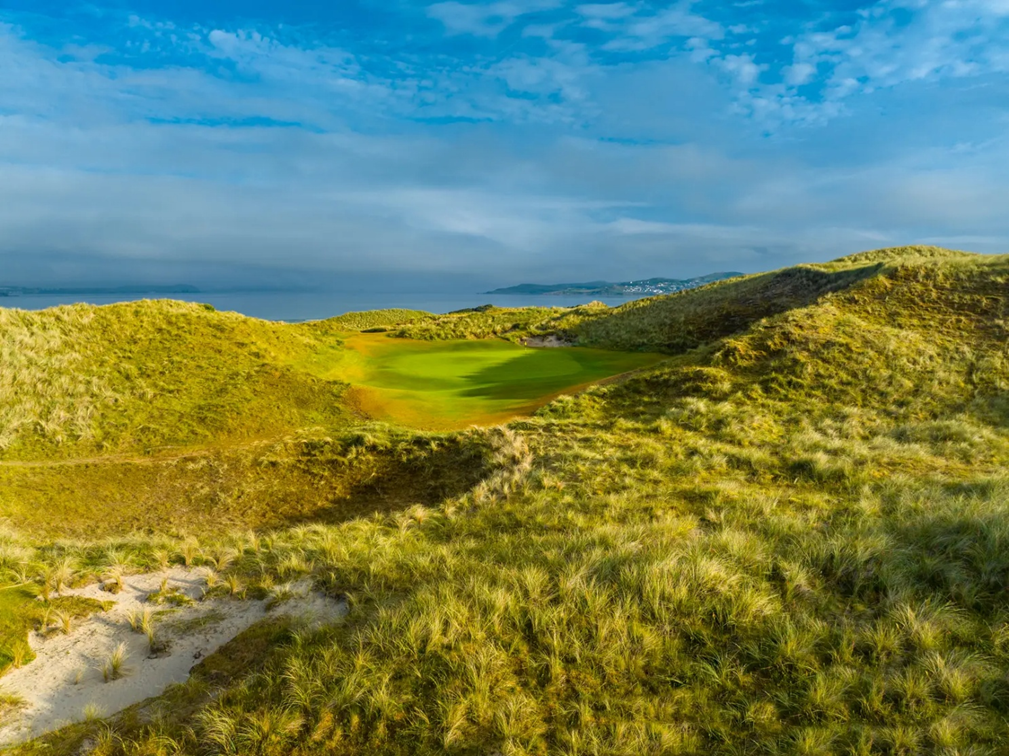
When you arrive at #4, Tra Mor (meaning big beach) a par five, you have made to the first of the three holes along Sheephaven Bay, From the tee, looking backwards and North, it is one of the best promontories on the course. the views go for miles. You can see back North to the other two courses, Old Tom and Sandy Hills, as well as the village of Downings, and the Errigal and Muckish peaks rimming the bay out to the Atlantic. Along with #14 tee, it is the most beautiful view on the golf course. This is the first of two holes that head south along the Bay.
#5, Monks Bay, referring to the secluded white sand beach, which lies below you to the right, as you are headed south is a great par-3. It is 153-yards and has a huge green that is some forty yards, front to back—that would be a 3-4 club difference for most golfers. I happened to hit it somewhat close to pin high, 40-feet left, and got out with a par.
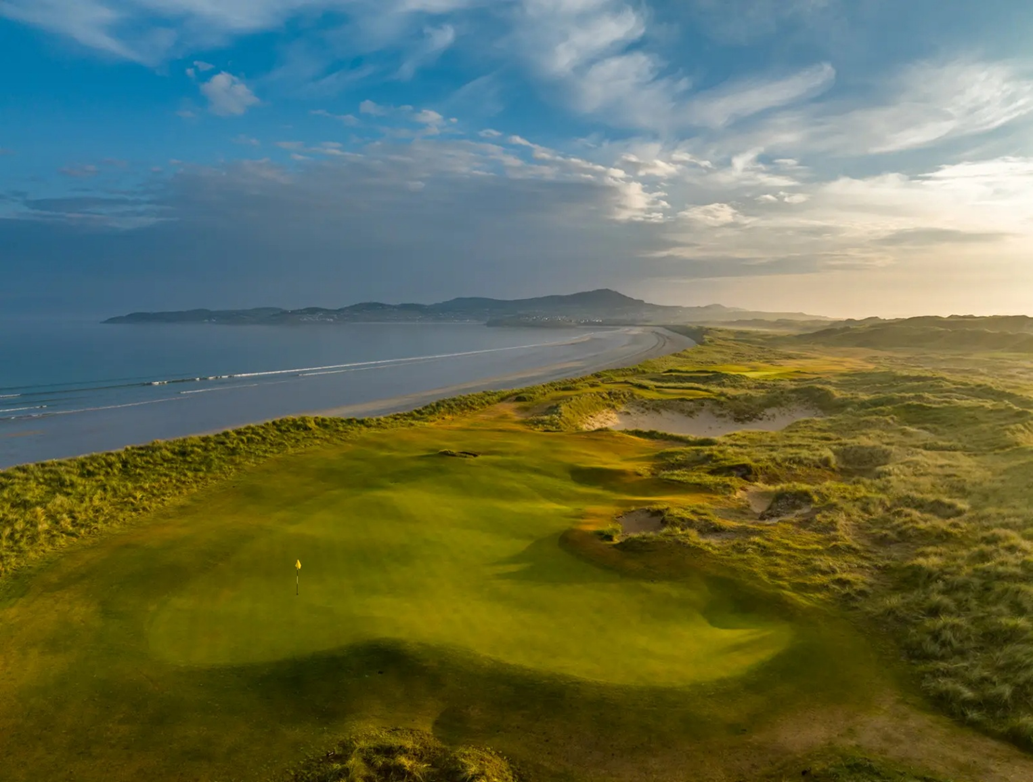
It brings up a key point to Tom Doak’s design philosophy. He loves large fairways, and large, undulating greens, oft-times with big humps and undulations or “buried elephants” as they say. Your challenge is to get the right line off the tee, thus putting you in the best position for your approach. As an example, you could hit a great drive, and be on the wrong side of the fairway, thus adding another 30-50 yards to your approach shot. Caddies come in handy, as you must get your approach on the correct side or level of the green or you will have a lot of long, challenging putts.
#6, Dunaibh, or Downings in Gaelic, parallels four and five and heads back North. Another stunningly beautiful hole, a par-5 of 522 yards. It is a slight dogleg left was you get closer to the green, framed by a set of high dunes that line the entire right side of the fairway.
The remaining holes, 7 through 9, Dunmore, Horn Head (magnificent view of the mountain in the distance) and High Glen are set of par-4s that run East or West and route you through the inward set of dunes back close to the clubhouse. High Glen is a brutal 460-yard, and a great end to one of my favorite front nines in all of links golf. They have a buggy awaiting you as you make your turn to get back to the clubhouse if needed, a nice touch, as it is a long walk.
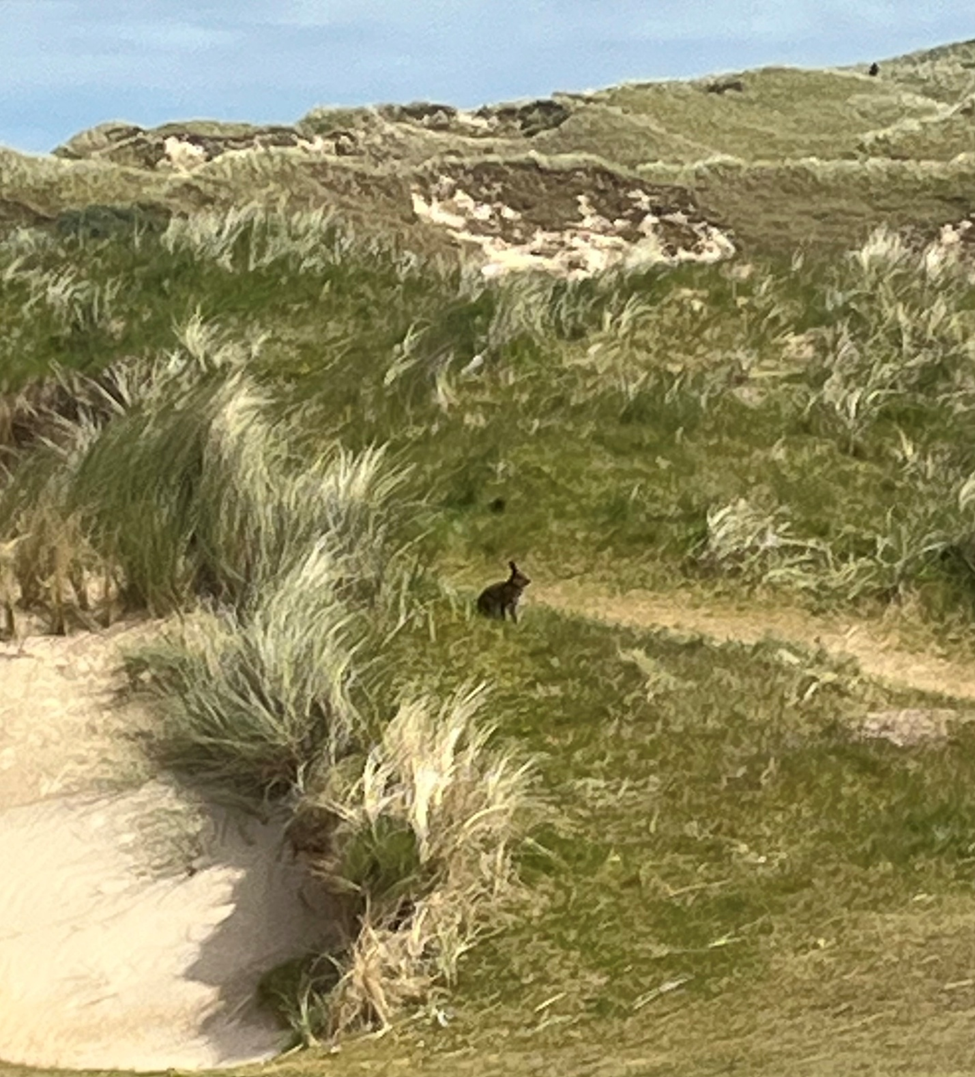
The back nine has four holes that skirt the large dunes area that was the old Eddie Hackett designed links, called Magheramagorgan. It has the highest dunes point in the area, at 110 Feet elevation. Ten, eleven and twelve all run parallel to each other, then #13, Aughadahor, a great, uphill 343-yard par-4 takes you straight at Sheephaven Bay. On your approach shot, you are looking at Horn Head mountain in the distance, with a high dune to the back right of the green.
As you walk off the back of the green, it is a true a-ha moment. You see the panoramic view and Sheephaven Bay in the distance, framed by the Errigal and Muckish peaks and other mountains in the background. It truly is the most breathtaking view on the course, and the good news is you are about to the play the best hole—in my opinion—on St. Patrick’s.
Number 14, Sheephaven Bay, is right at the top of my list for favorite par-4’s in Ireland—along with #17 Devil’s Elbow, at Ballybunion #6 Paradise at Lahinch, and #9 at Royal County Down. It is 365 yards, and a sharp dogleg right. The tee shot is downhill, then the approach uphill, and oft-times blind—especially if you are anywhere center to right of the fairway. The green is small and “suspended” up over the Bay which lies below. Wild, fluffy heather rims the rear fringe and anything long is in deep trouble. The hole fit my eye and was routed beautifully.
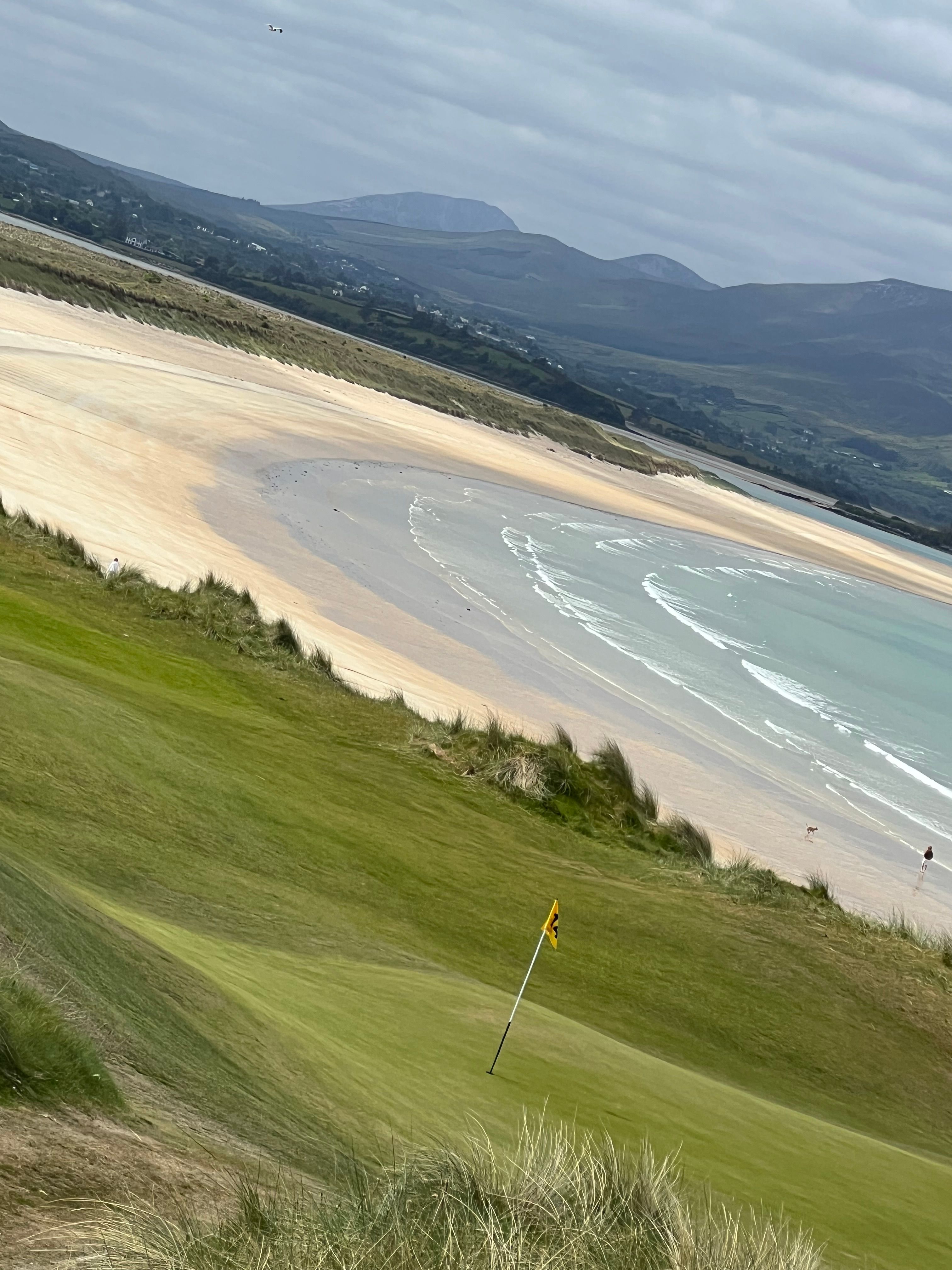
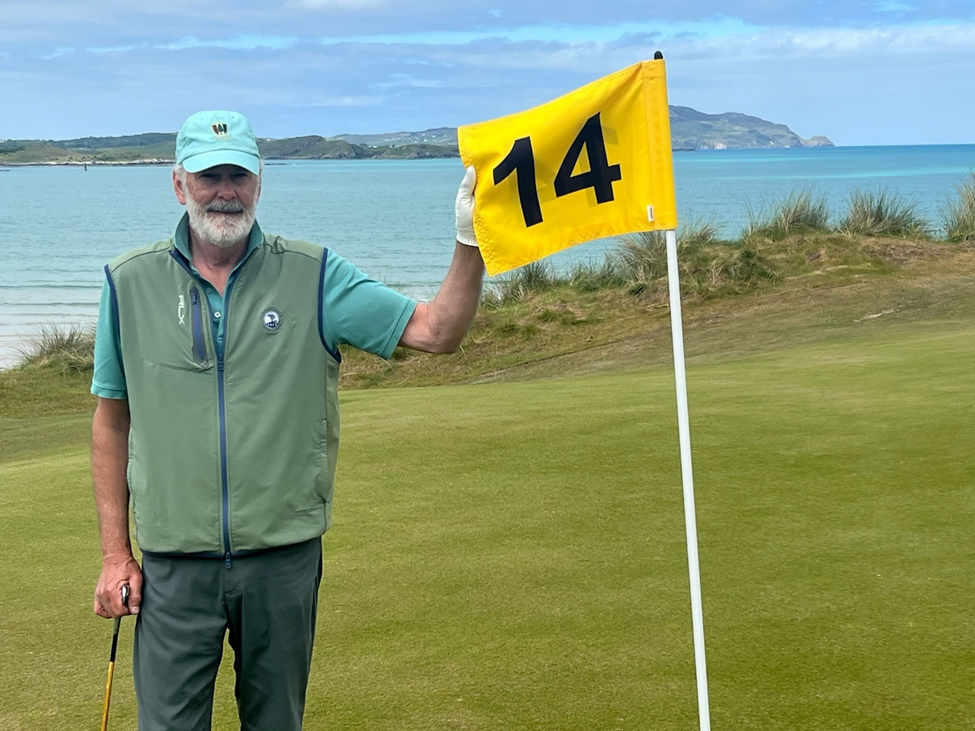
Sixteen (Finver) parallels holes 4-5-6 and heads back North. It is a brute at 487 yards (I dare you to play the back-tees, at 534!), and the #2 handicap hole. The tee has the same view as the Bay holes and #6, to the panorama of Sheephaven Bay, Downings and the Mountains. Luckily, it has a huge, wide fairway, and a receptive, bowl-like green complex. Note the beautiful natural bunker off the right side of the fairway.
The highlight coming in is certainly the par-3 17th, Lough Salt, 176 yards (Slate/Blue). It parallels the bay, and is uphill to a massive, three-tiered green. It has no bunkers--oft times a great idea--with a huge grass bowl drop-off front and left. It favors a links-shot and welcomes a low punch ‘n run in from the middle to the right side of the green. I am sure that it will soon be included along with Doak’s best par-3’s that I mentioned earlier.
The finish, #18, St. Patrick’s, is 344 yards, downhill, and a nice bid farewell. You only need to negotiate a nice, natural, pot-bunker in the middle of the fairway, about 210 yards off the tee. You are left with a short approach with a bunker left, and swale short right.
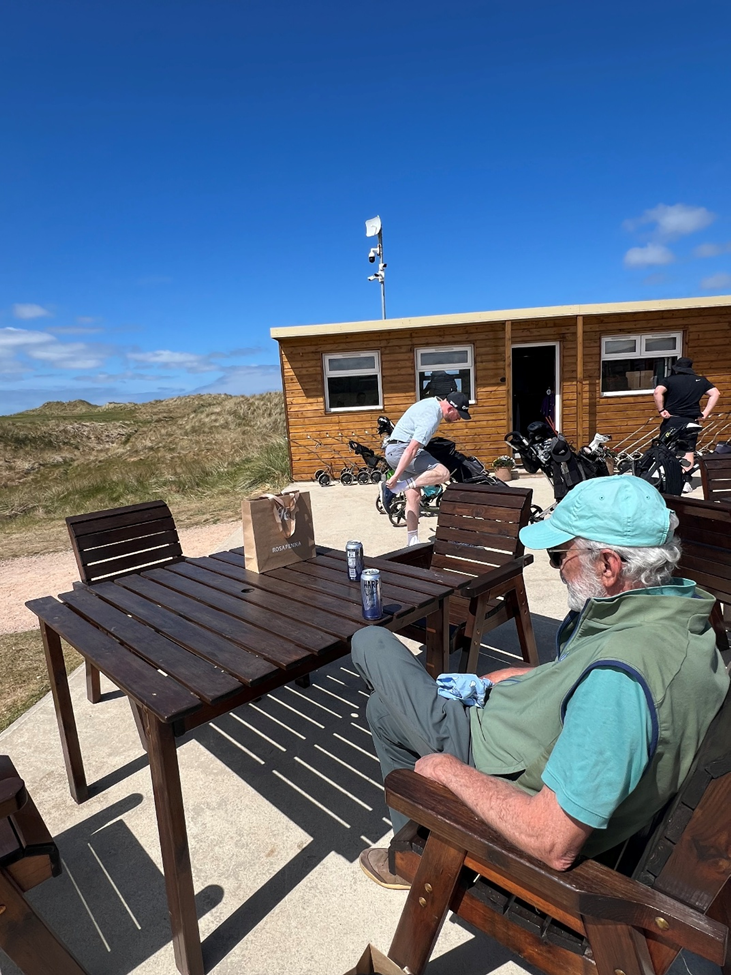
The temporary small clubhouse awaited, with a nice cold beer around a few picnic tables out front. There were a few foursomes arriving for an early afternoon round. It was still sunny, and the typical late-afternoon wind had not kicked up yet. We caught St. Patrick’s on a great morning and cannot wait to get back there.
Course Rating: a resounding Ace! Love this course and there is a reason why it is a World top-50. A Doak masterpiece. Rosapenna and the town of Downings is a wonderful golf trip in and of itself. Play the other two as well, Old Tom and Sandy Hills. You've also got Cruit Island an hour away!

The Course map

Scorecard

The 19th hole/patio
— COURSES —
More incredible links courses from Ireland
Eddie Hackett & Daniel Steele
A wonderful links course in County Sligo, on the Atlantic Ocean. It has the tallest, most wonderful dunes in all of Ireland

Pat Ruddy
The masterpiece of designer Pat Ruddy. A wonderful, brutal modern links course with wonderful views of Brittas Bay on almost every hole. A very stern test for golfers at every level

Harry Colt
A modern-day host on the Open Rota, Royal Portrush is a top-20 course in the World. An absolute must to play. Both challenging and beautiful, with gorgeous views and a great walk. It was named after the Dunluce Castle just down the beach where The Lords of Antrim lived centuries ago.