
Western Gailes Golf Club
Fred Morris
Western Gailes is beautiful, with great routing, fun, challenging green complexes and memorable holes--a classic links course




Scotland | Par 71 | 6551 Yards
Old Tom Morris, 1851
Course History:
I was looking forward to Prestwick as I had been reading about it for years. Founded in 1851 and designed by Old Tom himself, it had a rich history. It was the birthplace of The Open Championship having hosted the first 12 and 24 all told. The Moroccan red leather championship belt being its coveted prize—until the Claret Jug came about.
A group of fifty-seven golf-loving members meeting at the Red Lion Inn—formed the club and purchased a couple of cottages adjacent to the tavern.
One became the clubhouse, and the other was gifted to the greatest clubmaker and golfer/architect of the time, Old Tom Morris. He, his wife, and their son Young Tom moved from St. Andrews to lay out the first nine holes of Prestwick. Within ten years, the first Open Championship was hosted, beginning the tradition of the annual championship.
Wille Park triumphed over Old Tom to win the first Open by two strokes in 1860. It would have great Open run until it fell off the Rota in 1925, due in part to being too short for “modern-day professionals” and too tight and cramped a space to support the infrastructure required and large galleries that flock to the wonderful spectacle of The Open.
Whereas Old Tom moved his family back to St. Andrews, they would be a big part of the History of Prestwick, including championships, as well as the redesign, and extension to eighteen holes, along with Charlie Hunter, in 1882. Old Tom and Young Tommy would win four each. Tommy’s first coming at 17-years old, and Old Tom’s last at age 47.
Its initial design by Old Tom included 12 holes that crisscrossed over approximately 50 acres of beautiful linksland—and I think remarkably like the land at Machrihanish GC, pure, natural, dream-like. Our caddies made a point to show us the old boundary wall that defined the initial twelve holes.
Phase two began in 1882 after the game standardized to eighteen holes. Prestwick’s then head-professional Charles Hunter reconfigured the course and added six holes north of the boundary wall. By heading north from the third green, this phase added some of its best holes. They included number 1, Railway (can you say breakfast ball?), the fourth, Bridge, and my favorite, the par-3 fifth Himalayas—demanding a solid 180-200-yard blast uphill, over a giant dune to a blind green.
Subsequently, in 1922 James Braid and Harold Hilton completed the evolution of the course and it took its final form. My caddie Danny explained to us that number 17, Alps, with the Sahara Bunker is the oldest existing hole on The Open Rota—how is that for history? Six of the original Old Tom greens are still in play today. Although it fell off the Open Rota years ago, it is one of the few classic links golf courses and ranked as one of the best in the World—with its neighbor up the road, Royal Troon.
The Course
I thought about the 100’s of 1000s of golfers that had walked those hallowed grounds before me. Mackenzie’s description of “pleasurable excitement” certainly applies here. The reason I say that Prestwick is a must for every fan of links golf is twofold: First off, the course is unique and natural, and still belongs to a bygone era with its rippling fairways, burns, giant bunkers, a stone wall and valleys defined by large, beautiful dunes. Secondly, the club itself. It exudes family, camaraderie and history. Forget the scorecard and let your mind wonder back to the time of hickories and featheries.
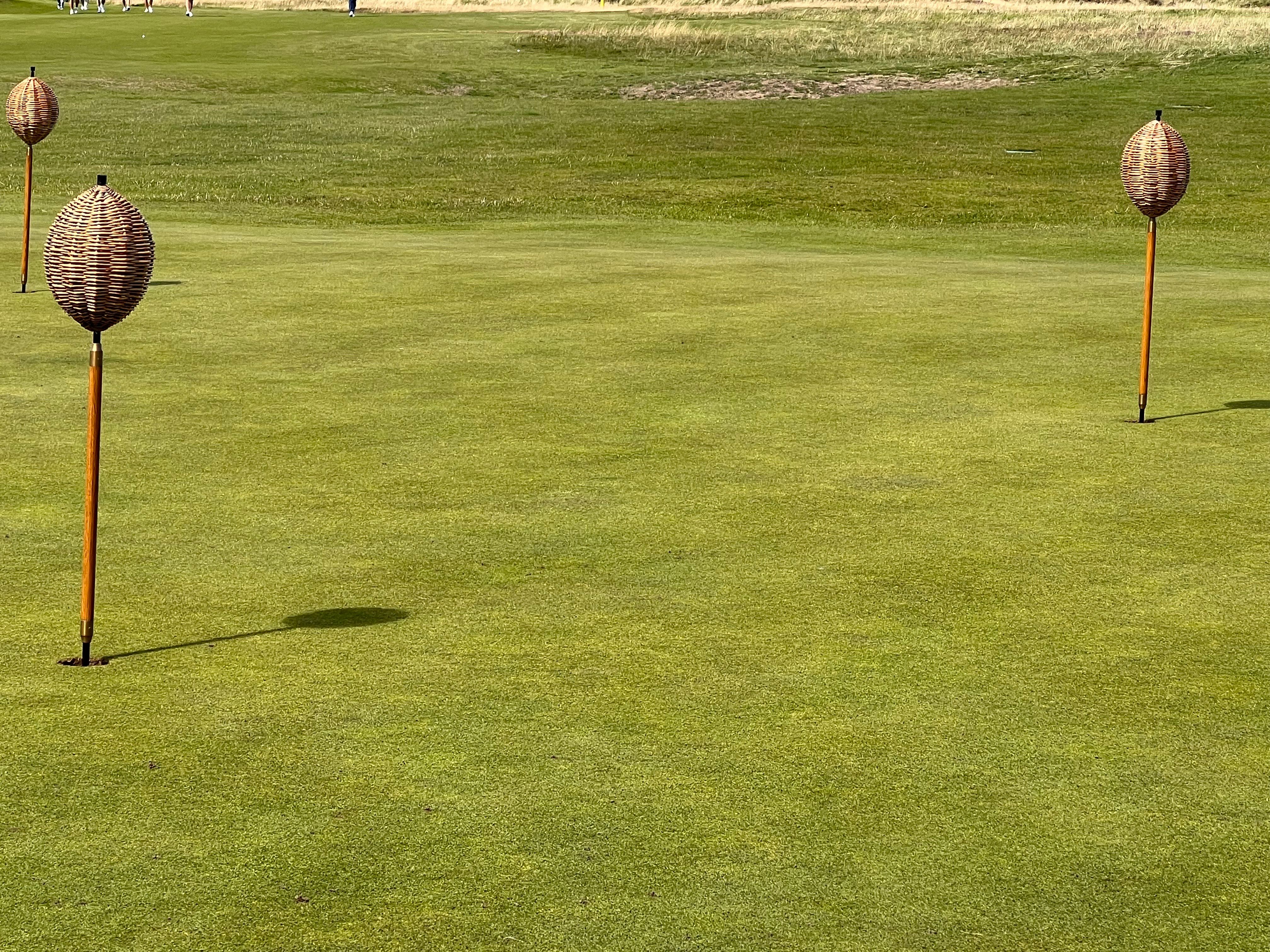
From the old school locker room, smoke lounge and wicker baskets on the practice green to the caddies, railroad tracks, stone wall and oft-mimicked classic holes Prestwick exudes history. It is all the good things about golfing, the walk, friends and family, class, ambiance and pure golf.
Walk just a few steps out of the clubhouse door to what I dubbed, “the family room.” You look left at the miniature wicker baskets on the practice green, right to the first tee, and beyond it, the nostalgia of the Railroad tracks. Not worry, you will for certain have an audience when you tee it up for the first shot of the day.
Through my research, I found that Prestwick indeed inspired Merion’s wicker baskets. Turns out it was due to a painting of Prestwick from 1903 where a young caddie is holding a wicker basket flagstick while Harry Vardon was putting in an international match between Scotland and England
Prestwick is golf’s version of a pilgrimage to Mecca. It is the Taj Mahal, the Colosseum, or the Great Pyramid of Giza. It is a homage to the game of golf, its beginnings, history, architectural founding father--Old Tom--and many of the holes that would be mimicked over the next 175 years.
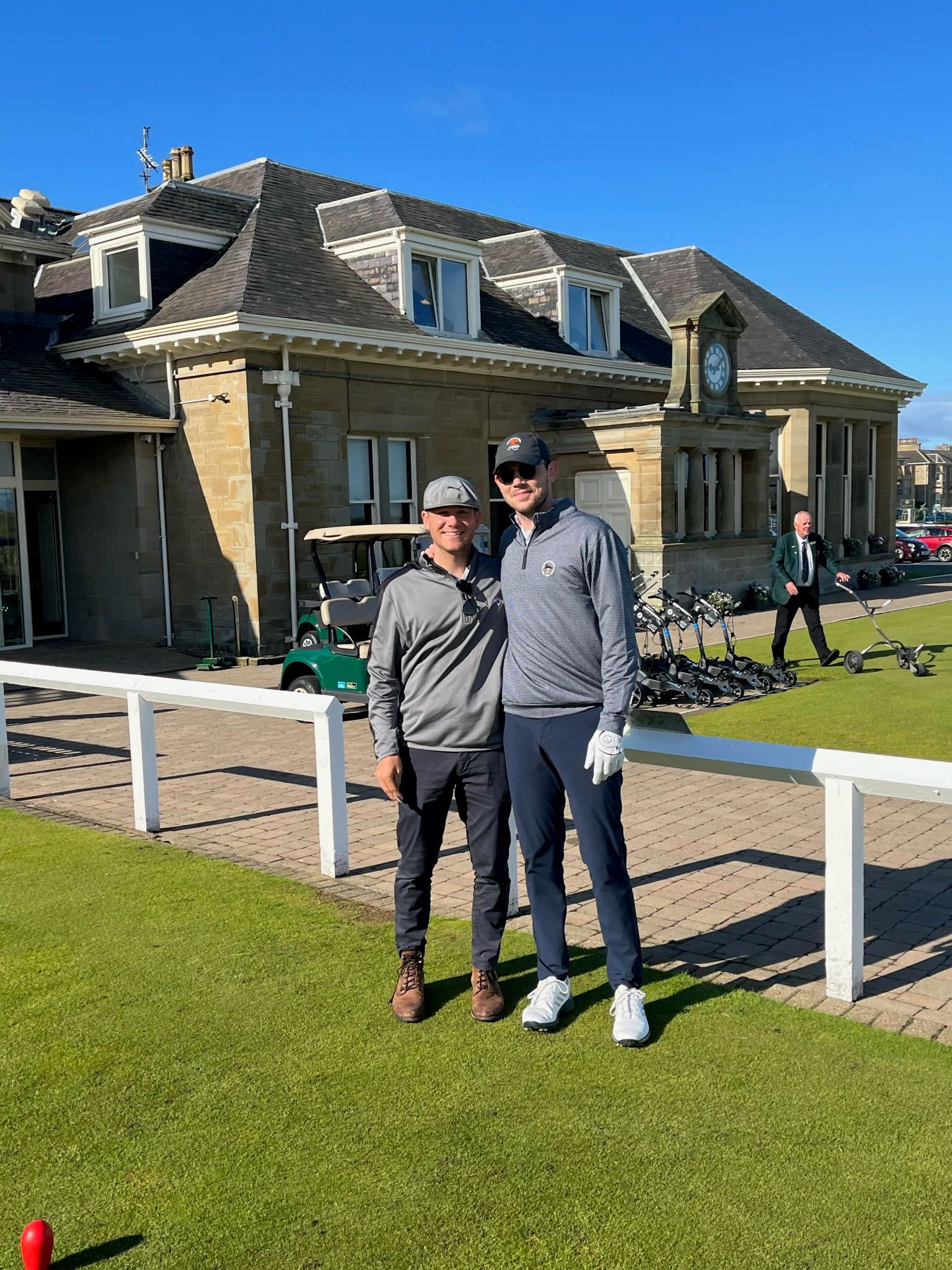
When you put your peg in the ground on the first tee, leave your thoughts behind on modern architecture and design, and immerse yourself in the history, old-school routing, shot making and the quirks and difficulties of links golf.
Our host, my friend WillieB, met us at the entrance to the clubhouse, and introduced us to David Flemming, Prestwick’s head professional, gave us a quick tour of the clubhouse and got us set-up in the locker room.
WillieB was next to the first tee when I walked out. He introduced me to Danny, my caddie, and then the others, Mark and Logan. They were a part of the fraternity of fourteen caddies that do not work directly for the club, rather independent contractors. They explained that they get the first dibs on all loops, and every day of the six they work every week they are guaranteed a morning and an afternoon loop.
I pulled out my hickory putter and showed it to WillieB, pointing out the name etched on the brass club head.
“J Jeffrey, Dalmore.”
He explained that Dalmore (and its Distillery) was North, off the Cromarty Firth, not that far from Inverness and Royal Dornoch. I told him that Nico had good luck with it the day before at Western and hoped it would do me well today.
Unfortunately, WillieB had a nephew’s birthday party to attend that morning, but he saw us off at the first tee and bode farewell.
“See you at Troon tomorrow, lads.”
The course is routed in a somewhat out ‘n back manner, with all the holes routed North/South, except for numbers five and ten. Eleven, twelve and thirteen head back South and all skirt the beach and Firth of Clyde.
If the first hole at Machrihanish G.C. is the best opening hole in all of golf, the first tee at Prestwick is the biggest gut-wrencher of a start. You tee it up just steps away from the clubhouse--typically with a crowd watching (including your caddies) and not having warmed up at all. Oh, and did I mention that the Railway is 30-foot to the right and lines the fairway all the way to the green? Many breakfast balls have been served up on this tee. That said, Railway is indeed a gentle handshake, at 345-yards, a five-wood or long iron off the tee leaves you with a short approach to a receptive green.
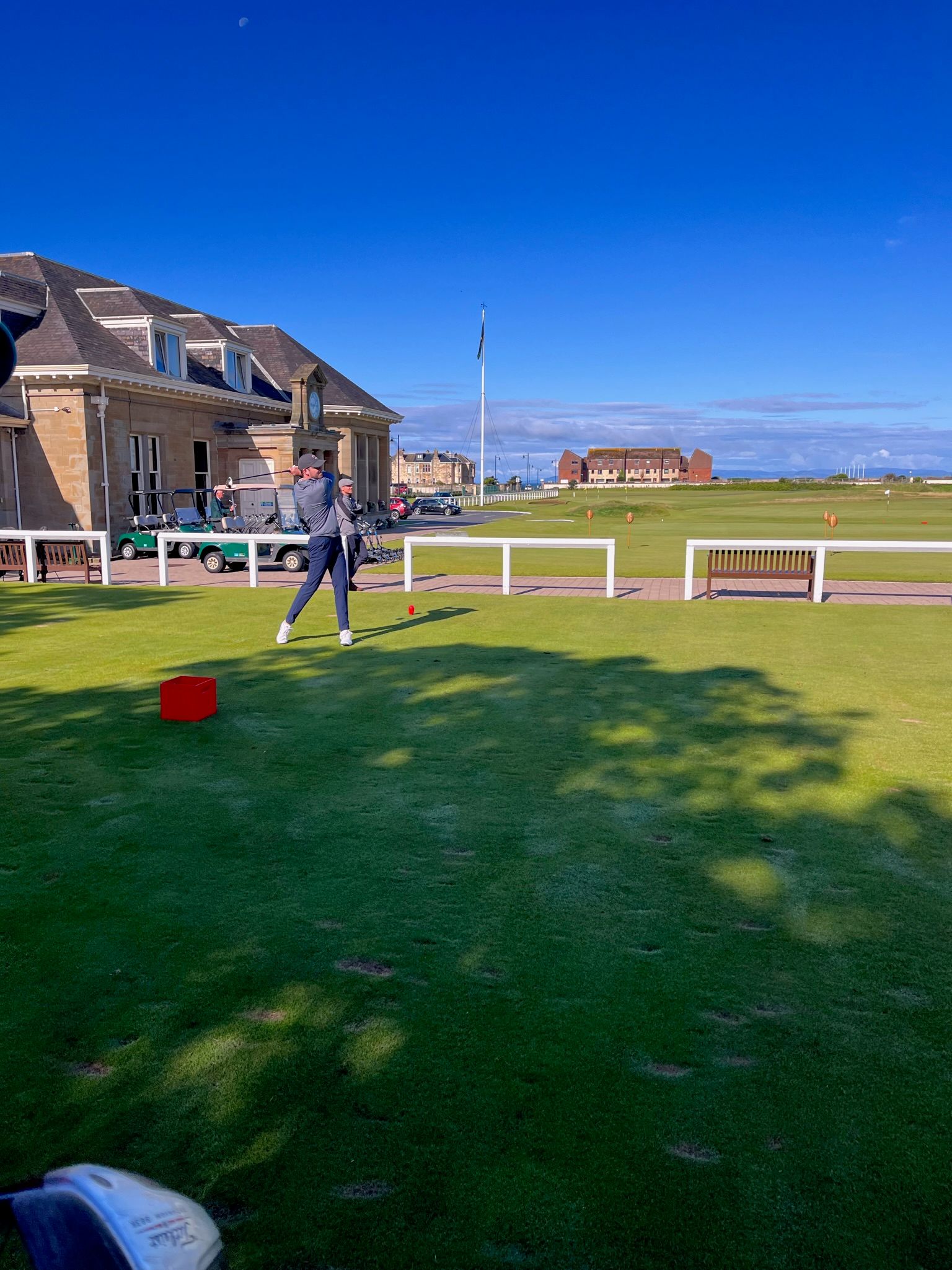
It is followed by the par-3, Tunnel, a downhill 145-yarder. Then comes a couple of my favorites on the front.
Number 3, Cardinal, is as unique of a hole that you will ever come across. It is a short par-five, at 477 yards from the white tees. On this day, it was into the wind. The Pow Burn meanders along the length of the hole up the right side. What you do not see from the tee is a huge, blind bunker at least 40 yards wide in the middle of the fairway as it crests. Beyond that, is the Cardinal Bunker as the hole doglegs to the right.
As we stood on the tee, getting our bearings from the caddies, Sam turned to his caddie, Logan, and asked.
“Can I reach this one?”
“Oh no lad,” Logan said, “from the back tee it’s a driver, a 3-Wood and a taxicab.”
Beyond the Cardinal Bunker, in the distance, you see the pin for #16, aptly named Cardinal’s Back, a par-4 that runs in the opposite direction, thus the Cardinal Bunker is positioned such that it can catch shots that are short and right of the 16th green. Hence the name, Cardinal’s Back. Not only was it unique, but a fun hole to play—I have said this many times, you just do not see holes like this in The States.
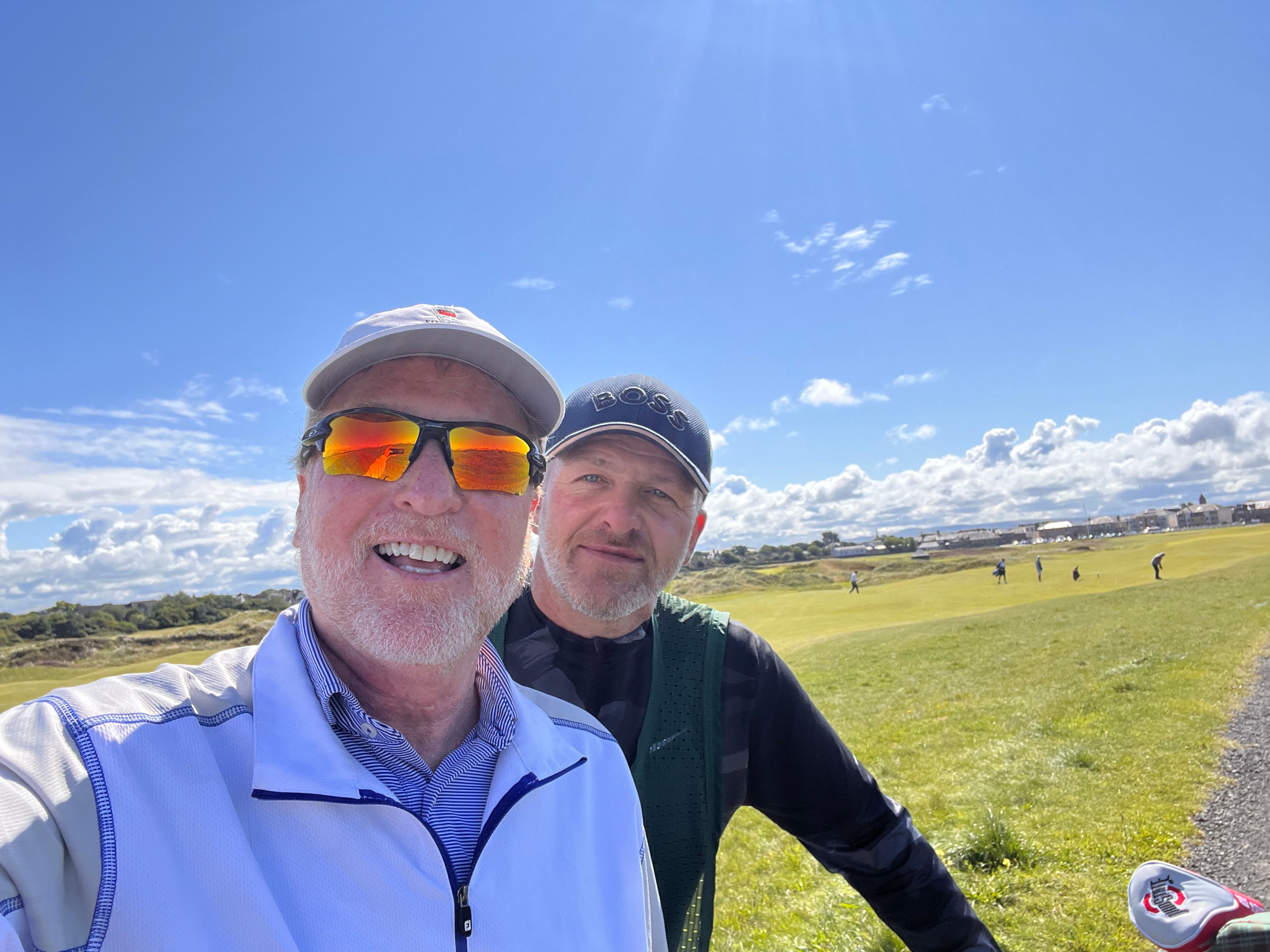
My other favorite, #5, Himalayas, an uphill, blind-shot par-3, at 194, and 180 from the up-tees. One of our caddies gave us the line from the crest of the hill. The green, with a huge pot bunker guarding the front-firth, was another 40 yards over the hill. My five iron found the front right part of the green for a two-putt par. Do not forget to ring the bell at the back of the green to let the group behind you know that you are safe to hit.
I have become a huge fan of blind shot and/or punchbowl par-3’s. Again, fun to play, yet very few exist on this side of the Atlantic.
Six through Nine are all par-4’s (Elysian Fields, Monkton Miln, End and Eglinton) at the back end (North) of the property, which is rolling and up-high with magnificent views to the Firth of Clyde—it is also a great walk as well.
Three holes stuck out in my mind on the back, numbers 12, 13 (along the Firth) and 17. Twelve, Wall, is a great, fun par-5. It got its name from the wall that surrounded the original 12 holes.
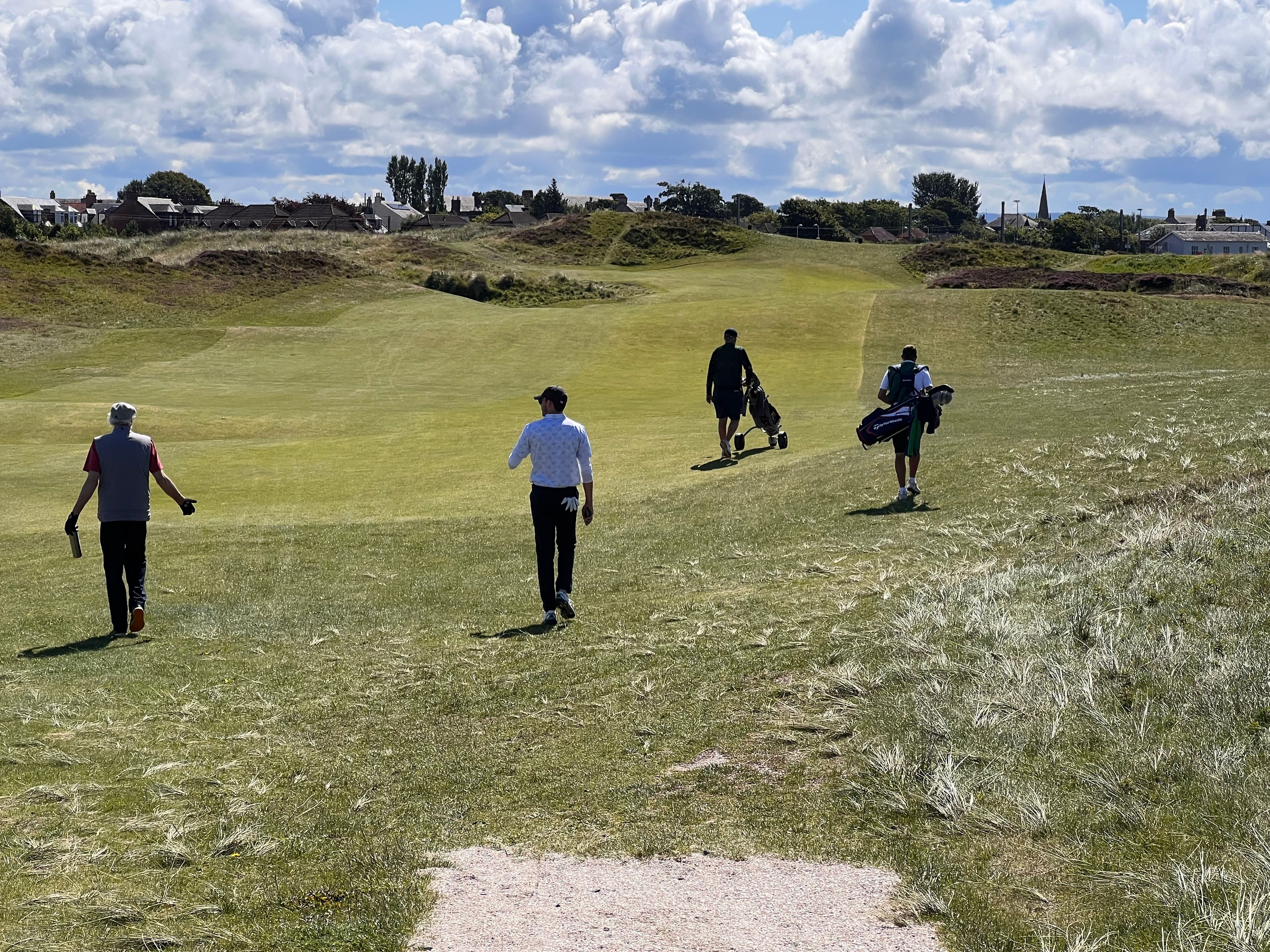
Number 13, Sea Headrig, is a beast of a par-4, at 458 yards from the tips, and is skirts the edge of the beach as well. It is the #2 handicap hole on the course, with a very wicked, crowned green. I happened to hit a 5-iron left of the green, below the hill to a pin position on the crest. I hit my favorite 7-iron low punch and run, some 20’ left of the pin and played the break rolling it to 3’ for a par. It made my day!
Number 17, Alps, is one of those holes you will remember the rest of your golfing life. This is the hole I mentioned earlier that is the oldest remaining, intact hole of the Open Rota. As a par-4 of 394 yards, It has everything. An uphill tee shot to a narrow, undulating fairway surrounded by dunes, with not one flat lie to be found anywhere. Your approach? A blind shot over the dunes, and over the Sahara Bunker to an amphitheater-like green complex. It is the one of the most visually appealing yet treacherous holes I have ever played.
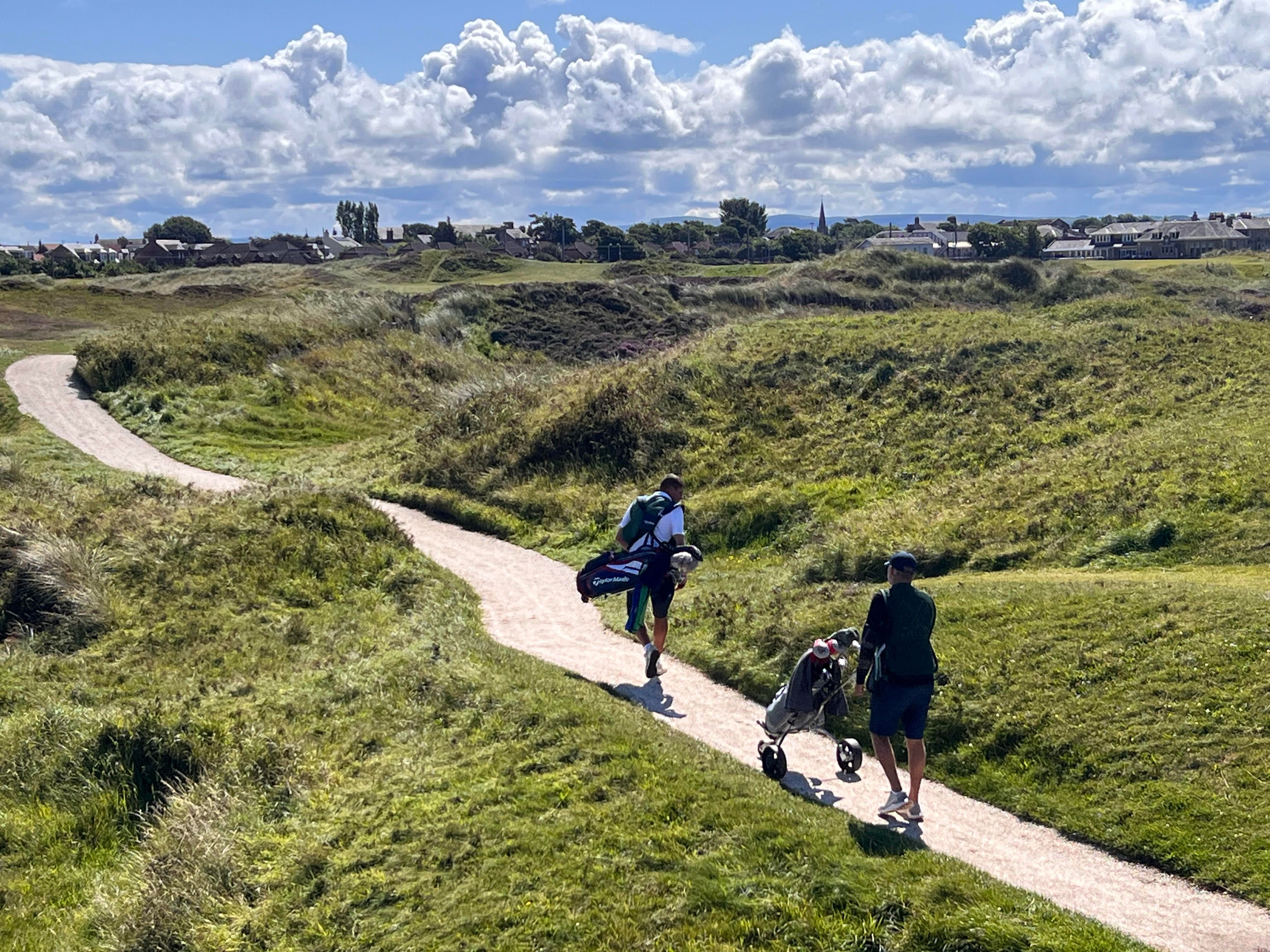
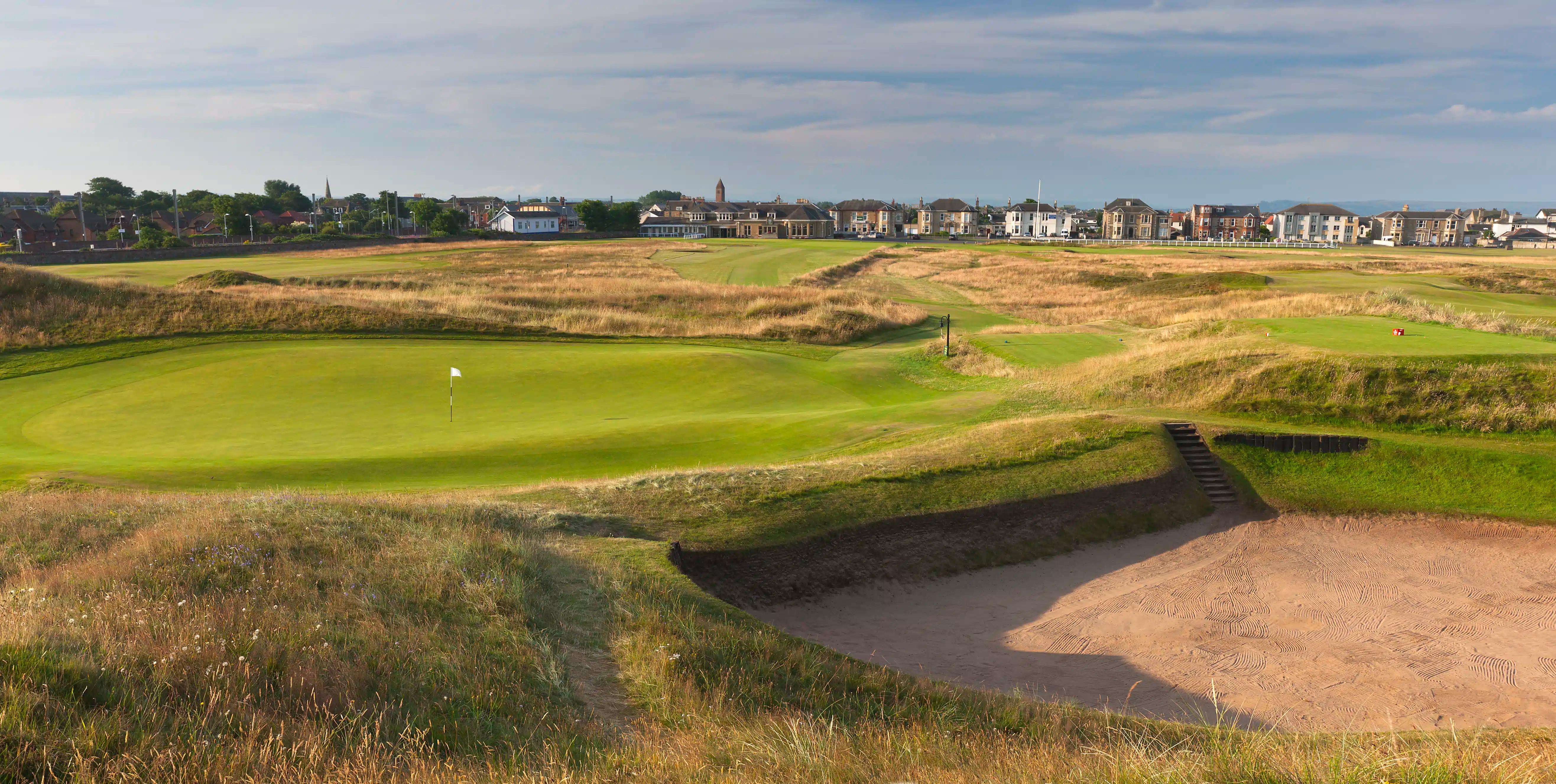
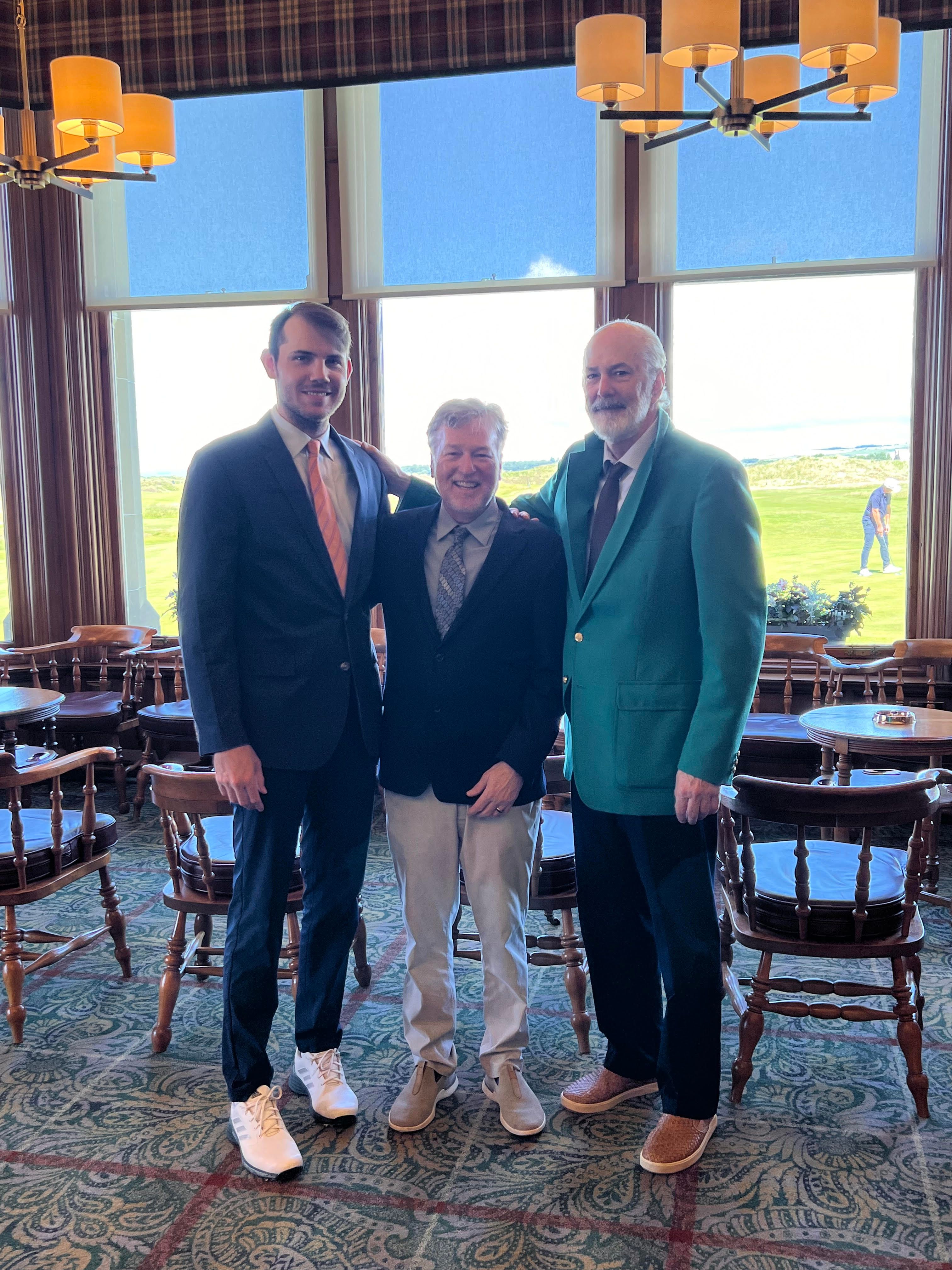
As I walked up the eighteenth fairway on Clock, I had a beaming smile on my face, gazing forward at the beautiful backdrop of the clubhouse. The non-stop comedy of the caddies, the history oozing from every tee to green, and the anticipation of diving into the smoke room and one of the best 19th holes in all of links golf. Little did Scooter, Sam and I know that we would be joining the Board of Directors of both Prestwick and Royal Troon in the Members’ dining room. Wow! It still gives me goosebumps.
Head over to the Stories section of this website and check out “Table for 27-A Lifetime Experience at Prestwick Golf Club.”
Prestwick is magical and a round that every golfer must experience at least once in their lifetime. When you play Prestwick, make sure that you have caddies, it is a must. Certainly, for the lines and reading of greens, but more importantly, the banter. It is unequalled anywhere. I do not know what was more fun, the course or the back-and-forth bantering, jokes and busting of each other’s chops that filled our round.
Why Play the Course?
Easy question because it is Prestwick! The history, the first home of The Open. An Old Tom Morris masterpiece. All the 1000’s of famous golfers that have graced its fairways and greens. Tom Watson and Sandy Tatum have it in their top four pure links courses, along with its neighbor Royal Troon, Royal Dornoch and Ballybunion. necessary for every links golf enthusiast, at least once in their lifetime
Course Rating: Ace

Map of Prestwick and the wonderful classic clubhouse

The Last Caddie, Chris McBride

Loved the Locker Room
Scorecard
— COURSES —
More incredible links courses from Scotland
Fred Morris
Western Gailes is beautiful, with great routing, fun, challenging green complexes and memorable holes--a classic links course

Old Tom Morris, 1876
Machrihanish Golf Club is one of the most natural links courses you will ever walk. I am quite sure it looks now as if the fairways were when Old Tom Morris first found them 149-years ago. A great routing through beautiful dunes, with undulating, fast and easy to read greens.

George Strath & Willie Fernie & Charlie Hunter
Royal Troon is one of the big four classic links courses, with a rich history, and having hosted 10 Open Championships. Top 70 Course in the World. Tam Arte Quam Marte!