
Prestwick Golf Club
Old Tom Morris, 1851
An Old Tom Morris designed classic links course that hosted the first 12 Opens, and 24 all told, still rated in the top 70 in the World




Scotland | Par 71 | 6640 Yards
Fred Morris
Course History:
The course was opened in 1897 when Fred Morris began to design the first nine, and he completed the second nine a year later. The Club was thankful to the Sixth Duke of Portland who agreed to lease the land to the them and later sell it for just £3,360 in 1920. An element of the crest of the Portland coat of arms, with slight modification, is still used by the Club and both the Sixth and Seventh Dukes were Honorary Presidents. It remains one of my favorite logos in all links golf. Not unlike most links’ courses, Mother Nature has had much more control than man in the development of Western Gailes and the course remains largely unmodified from its original layout.
Not too long ago, the northern three-quarters of the course was designated a Site of Special Scientific Interest (just like Machrihanish Dunes). The Club has willingly accepted the special responsibilities this entails in the care of the environment with golfers rewarded in the summer with a plethora of wildflowers, the most striking of which are the wild Northern Marsh orchids to be found in the swale at the 15th and in front of the 16th tee.
The railway has been a significant part of Western Gailes’ history. The train allowed the members from Glasgow easy access to the Ayrshire coast, making the development of Western Gailes possible. The railway remains a major feature of the course as you head back from the 14th homewards.
It has hosted many championships over the years including Scottish Amateurs, Walker and Curtis Cups as well as Senior events.
Course Review:
The Ayrshire Coast is home to many great links courses, and Western Gailes is the least known and most underrated of all—some even go as far as to call it a hidden gem. Most Americans have not heard of it unless they have employed a golf travel company to put together their trip. It is certainly hard to stand out when your neighbors include Prestwick, Royal Troon, and Turnberry, but trust me, it is not to be missed on a trip to the Ayrshire Coast. The routing and dunes reminded me of Royal Troon and its greens are in my top two favorites in all of Scotland, along with Machrihanish G.C.
Our friend WillieB recommended Western (as he calls it) early on in our planning. “Western will do you well,” he said as a confirmation.
I knew what we were in for before we even made it to the first tee. The pro-shop attendant gave me a quiz as we checked in:
“Our course, Western Gailes, is the second most difficult in all of Scotland. Care to guess which one is first?”
“Carnoustie?” I quickly replied with a grin on my face.
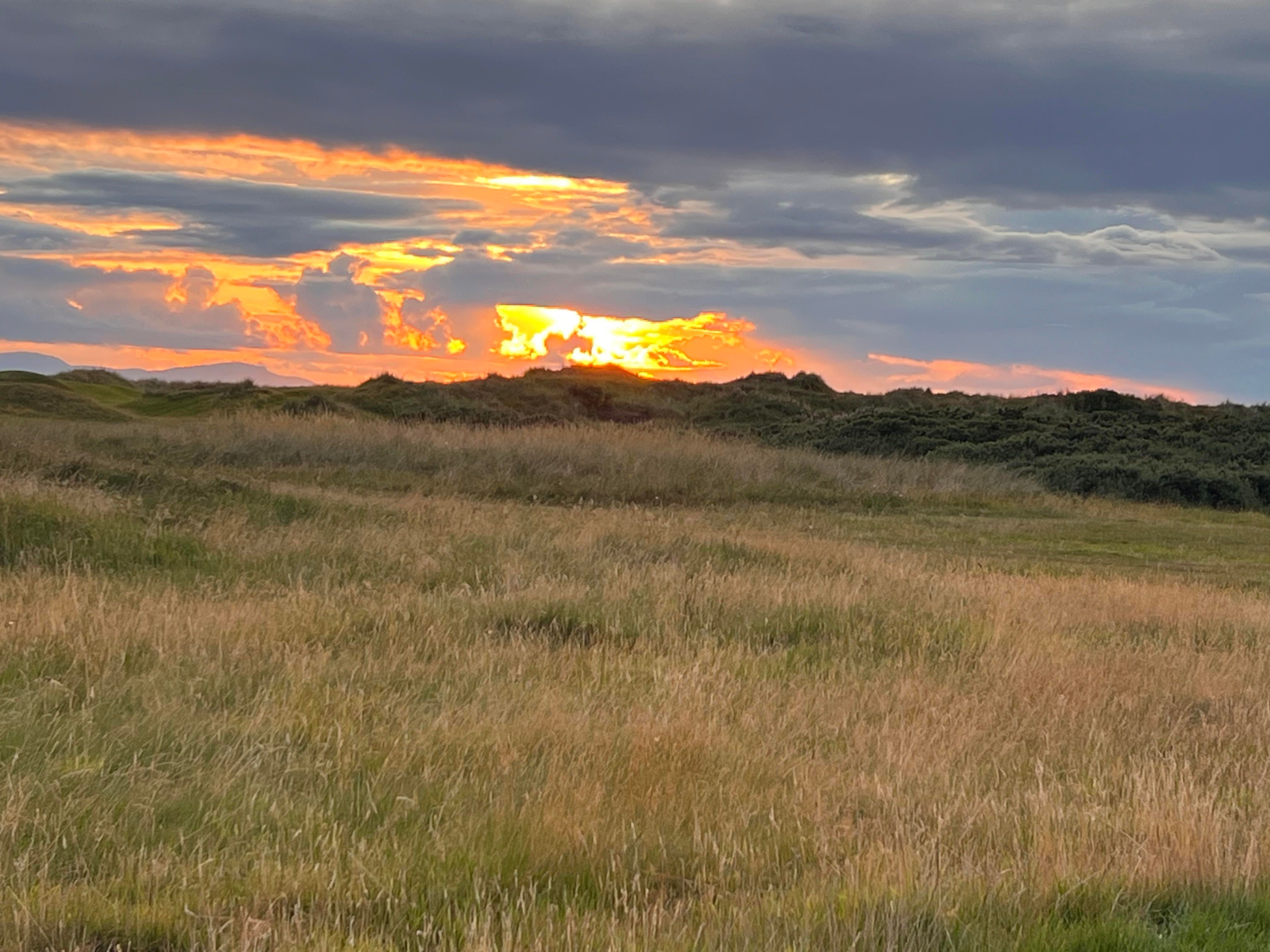
If Prestwick & Royal Troon are the main course surf and turf of Ayrshire, Western Gailes is a great appetizer. Take my word for it, it is simply flat out, classic links golf. Semi-out and in routing, through gorgeous heather-covered dunes, with the most beautiful sunsets that I have ever experienced on a golf course.
We played it on a Saturday, at 4:45 in the afternoon. That afternoon would give us the only short, slight drizzle of rain for the entire trip, then settle in with a light breeze off the Firth of Clyde.
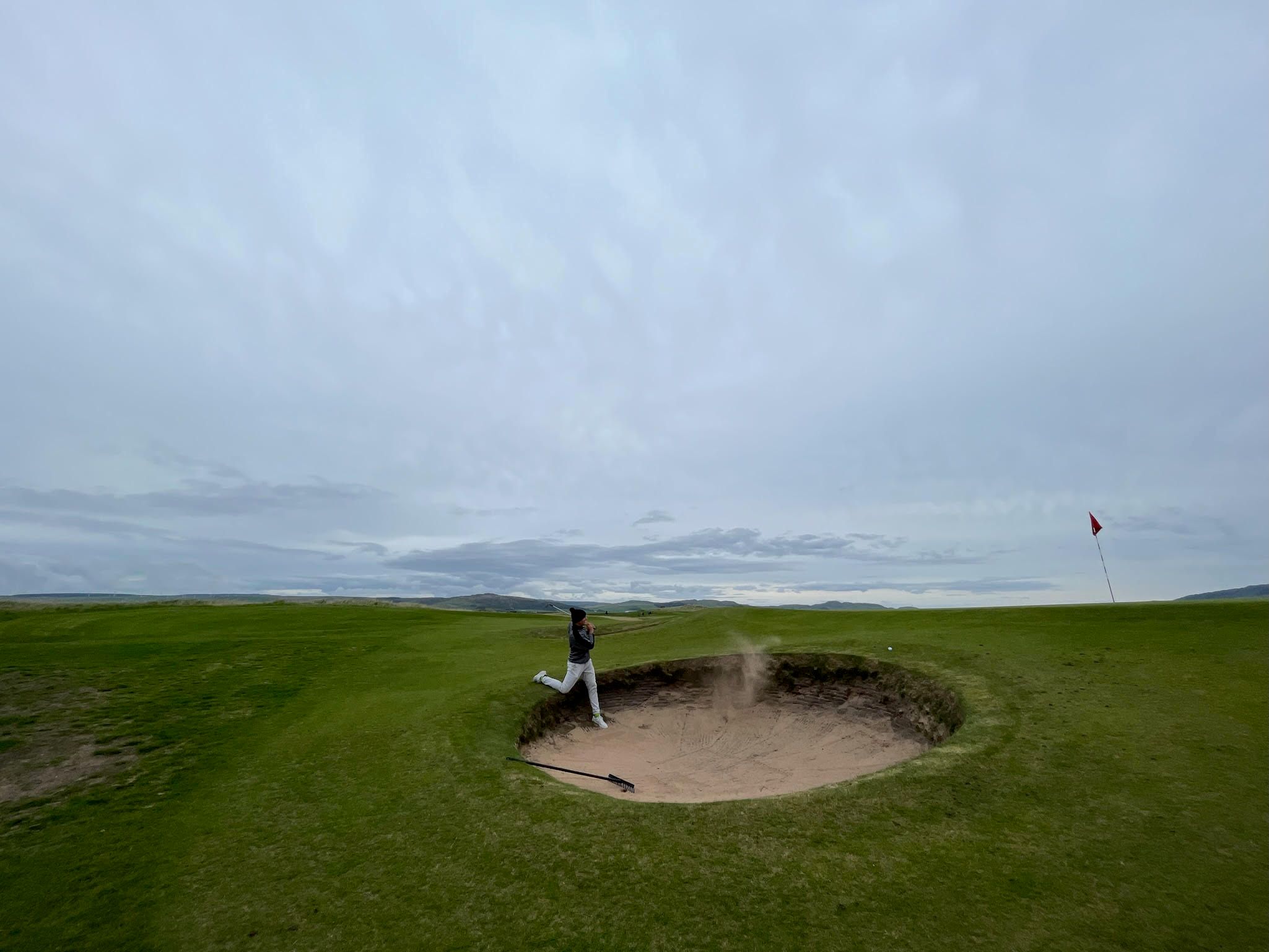
Although Western’s greens were fun to putt, short misses could result in large scores. Primarily, the green complexes are both beautiful and treacherous. The golfer does not always have an open approach into the front—either blocked by pot bunkers or the occasional burn--and Western easily has as many bunkers as Royal Troon—its neighbor to the South.
The property is not that wide/deep, from the beach to the Eastern border of the property bordered by the Railway. I call it an out/back/in configuration (almost a classic out and in) with the first four holes heading North from the clubhouse, then it turns back for numbers five through thirteen along the Firth of Clyde (although the par-3 thirteenth is the only crosswind hole) before coming inward to the clubhouse on fourteen through eighteen. The prevailing wind is from the Southwest, off the Firth, thus the name, Western Gailes.
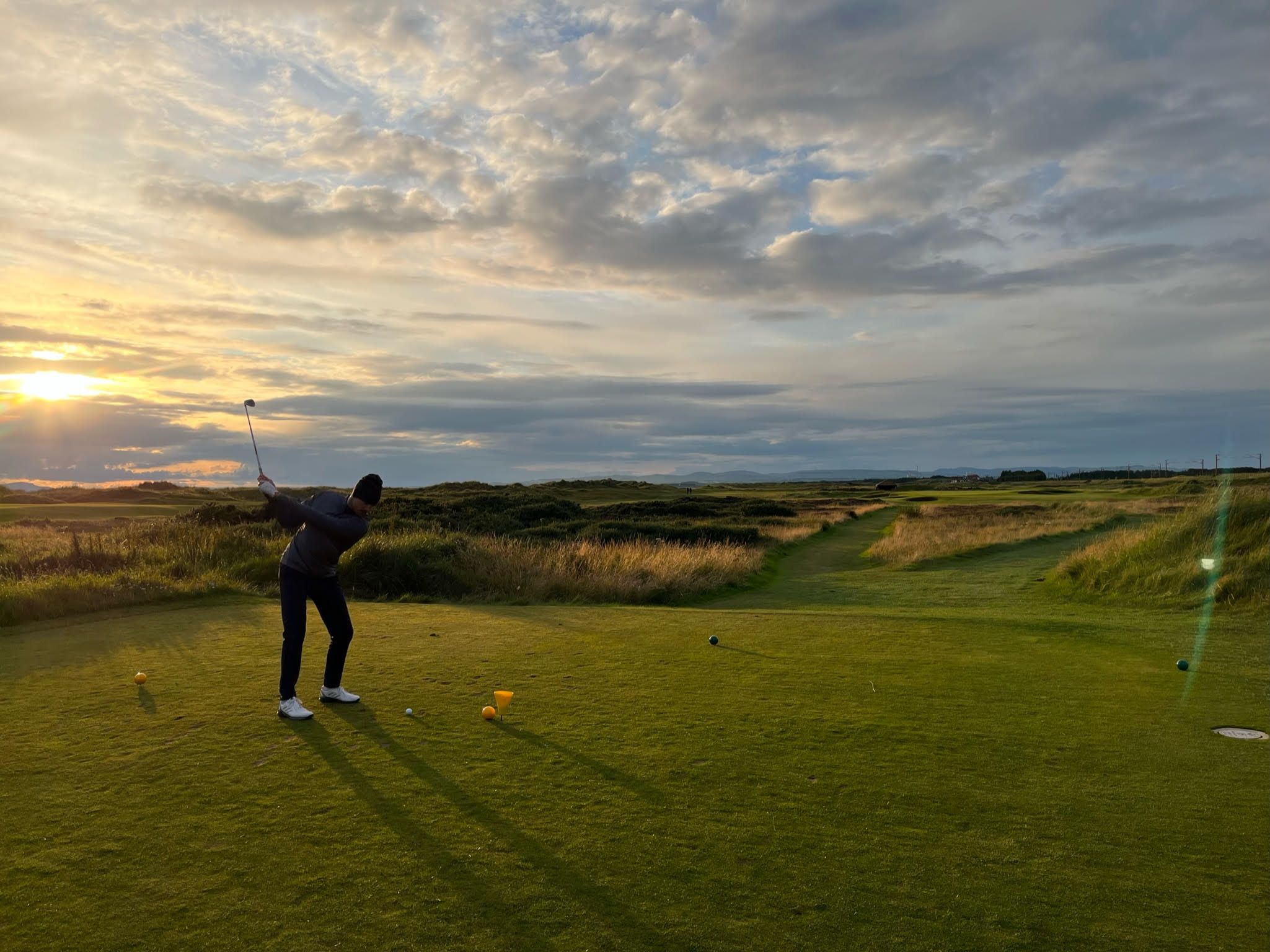
As you make the turn back southward for holes five through twelve along the beach and water, the fairways seemed as though they were sunk below the first dune rimming the beach and water. It resulted in more of an amphitheater-like feel with fluffy, beautiful dunes accentuating the rolls and undulating valleys. Like an abstract moonscape. The low afternoon Sun accentuating the undulations.
The Railway skirted the course on the East side, away from the Firth, just like Prestwick, all of eight miles North. It was the most unique of all the scorecards in Ayrshire as it is a par-71, with only two par-5’s and three par-3’s. A longer than most 6,640 yards from the whites, and a brutal test at 7,014 from the blues.
We thought we were cruising along well until we turned back south on number 5. Little did we know how heavy the breeze was until it smacked us in the chops for the next nine holes along the beach.
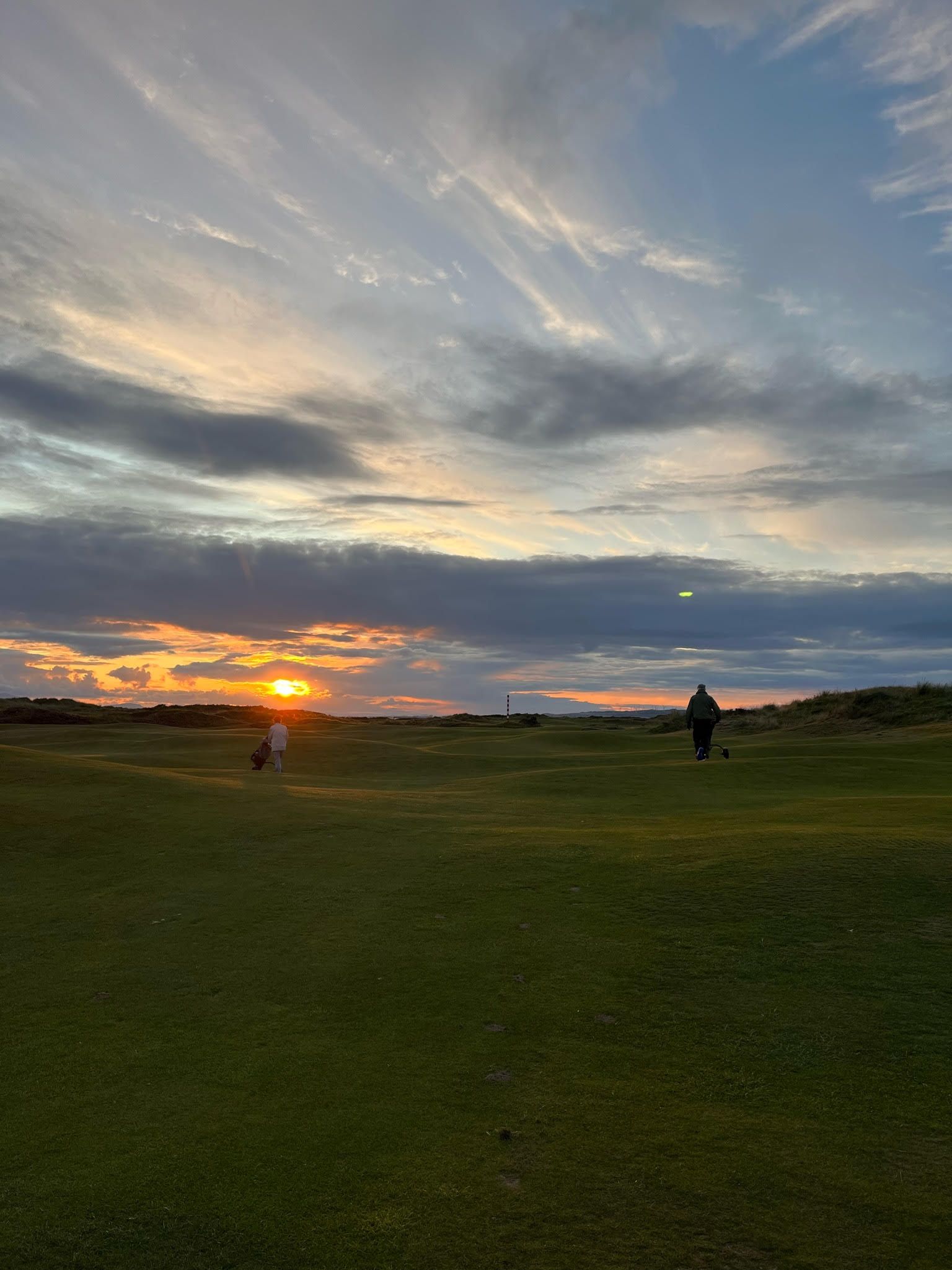
My favorite three-hole stretch on the front began with the sixth, Lappock, an awesome par-five that had the coolest green complex on the course, nestled in a bowl between dunes and the beach on the right—the first two shots are blind—with only a black ‘n white striped pole target in the back of the green. It was like holes at Cruden Bay and Askernish.
Then came one of my favorite par-3’s anywhere in Scotland, the seventh, aptly and simply named Sea. It was awe-inspiring from the tee and seemed like its own little amphitheater, with an enlarged, kidney-shaped green surrounded by seven deep, menacing bunkers. As we prepped for our 140-yard seven-iron tee shot--into a decent breeze, we could just faintly hear the ever-so-light lapping waves on the beach just over the dune. There were a few incredibly happy dogs enjoying a pre-dusk stroll.
The eighth, Burn, a playfully cool short par-4 at 365 from the whites, and only 258 from the green tees gave us our first introduction to the Burn that fronted the green thereby demanding a 250-yard carry if you are going for it, or eliminating a punch ‘n run second to the green if not. As we approached the green, we got a good laugh when we saw two strategically placed ball-retrievers just next to each bridge. Chauk one up to the kindness of the Scots. Would you ever see that in the States?
We would see the two Burns come into play on holes 8, 10, 12 and 16. All very strategically placed, fronting and/or wrapping around the greens.
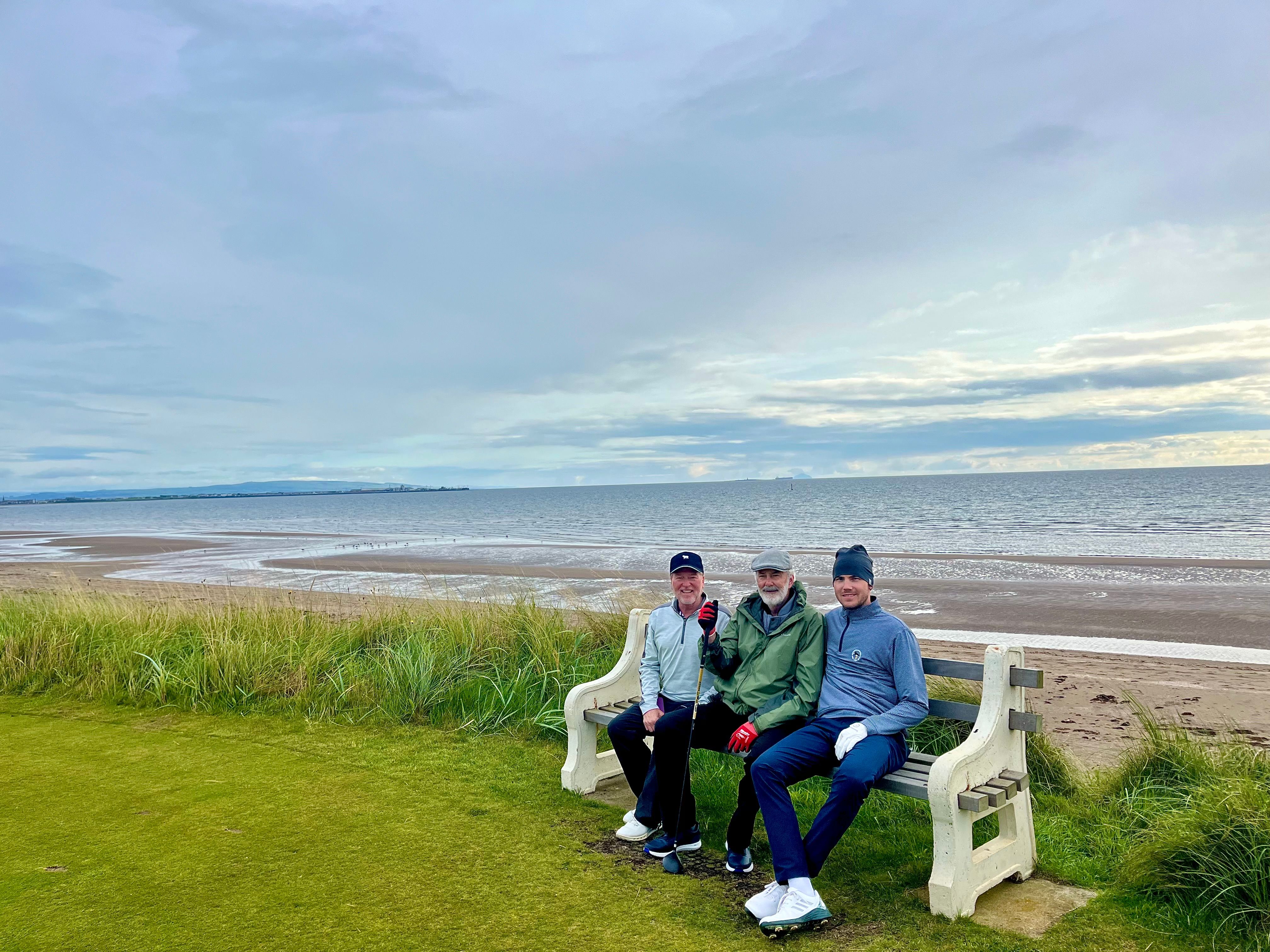
Number thirteen, Barrassie, a par-3, ended up the stretch along the beach and is really the only hole that has a cross wind. It is short at 125-yards from the green/senior tees and 141/whites but is a wicked target fronted by the burn, four pot bunkers, and topped off by two grass bunkers and a back-stop dune. No bail out here, simply pucker-up, and hit a golf shot!
There was not one weak hole coming into the house from fourteen in along the Railway—all with a tailwind. After the fourteenth, Whins, a narrow beast of a par-5 topping off at close to 600-yards from the tips you have the last of the par-3’s, Heather, then you finish up with three par-4’s coming in—Camp, Ridge and Home.
Number 17, Ridge, along with Lappock, was easily the most memorable hole on the course. A 440-yard par-4 from the white tees. Its namesake ridge beginning at around 230 yards out, running from the left side rough to right, entering the right rough around 70-yards out from the green. It created a blind, uphill approach shot, but more importantly, there did not seem to be a flat lie anywhere on the fairway—dotted with Himalayan mounds and ridges. Tom Doak and Gil Hanse would be proud!
My only regret is that we could not enjoy the 19th hole as it had closed by the time we finished our round—however we did take a spin through the locker room and 19th hole for a snack before the round. It looked amazing, looking out toward the dunes to the Firth of Clyde and Arran beyond. Next time!
Why Play the Course:
They say that great golf courses have the same characteristics, no matter where they reside—--beauty, great routing, fun, challenging green complexes and memorable holes. Western excels at all of those! I would go back there just to play #’s 6-7 (Lappock and Sea) and Ridge, #17.
My Rating: Western Gailes is a resounding Eagle!

Par 71, 6,640 yards from the whites / Tips-7,014 yards
— COURSES —
More incredible links courses from Scotland
Old Tom Morris, 1851
An Old Tom Morris designed classic links course that hosted the first 12 Opens, and 24 all told, still rated in the top 70 in the World

Old Tom Morris, 1876
Machrihanish Golf Club is one of the most natural links courses you will ever walk. I am quite sure it looks now as if the fairways were when Old Tom Morris first found them 149-years ago. A great routing through beautiful dunes, with undulating, fast and easy to read greens.

George Strath & Willie Fernie & Charlie Hunter
Royal Troon is one of the big four classic links courses, with a rich history, and having hosted 10 Open Championships. Top 70 Course in the World. Tam Arte Quam Marte!