
Enniscrone Golf Club
Eddie Hackett & Daniel Steele
A wonderful links course in County Sligo, on the Atlantic Ocean. It has the tallest, most wonderful dunes in all of Ireland



Ireland | Par 72 | 6690 Yards
Fred Hawtree, Eddie Hackett, Mackenzie and Ebert
Course History:
Excerpt from The Island’s web page
The Island has a great history. founded in 1890, the club was unusual in that it had no military connection and was founded as a private club for the benefit of the members and their families. The ten founder members, known as the ‘Syndicate,’ only permitted others to join the club on an annual basis as annual ticket holders. Over time, the term ‘ticket holder’ changed to ‘associate member.’
Most of the members of the Syndicate were already members of The Dublin Golf Club (later The Royal Dublin GC) which was founded in 1885. However, while The Dublin GC was seeking a more suitable location for its course than the Phoenix Park, several of their members investigated the potential of Malahide, Co. Dublin.
“In September 1887 four men rowed across the channel which separates the North Dublin village of Malahide from the spur of land to the north known locally as the Island. Their mission was to survey the wilderness and assess its suitably as a golf links.”
This visionary boat journey is thus described in the first hand-written account of The Island’s history by John Horish, a farmer who lived in the house at the entrance to the club and whose father did most of the work preparing the course.
Once the Syndicate had negotiated a lease of the land with the Cobbe family of Newbridge House, Michael Horish, a local farmer, was engaged to cut the fairways and greens with a scythe in preparation for a mowing machine. It is not known who was responsible for the design of the original course, comprising eighteen individual holes, but it was imaginative in how it followed the valleys between the many sand dunes while following the paths of least resistance. The course has been altered several times since that time to become one of the finest championship links in the country but has retained the basic character of a links amid beautiful sand dunes.
The founder members numbered ten in total and were collectively known as the ‘Syndicate.’ They were John Redmond Blood, David Francis Moore, James J. Law, James Rippingham Bristow, Henry J. Daly, William Samuel Hayes, James Henry Barrington, Godfrey Ferguson, Thomas Stewart and Daniel Martin Wilson.
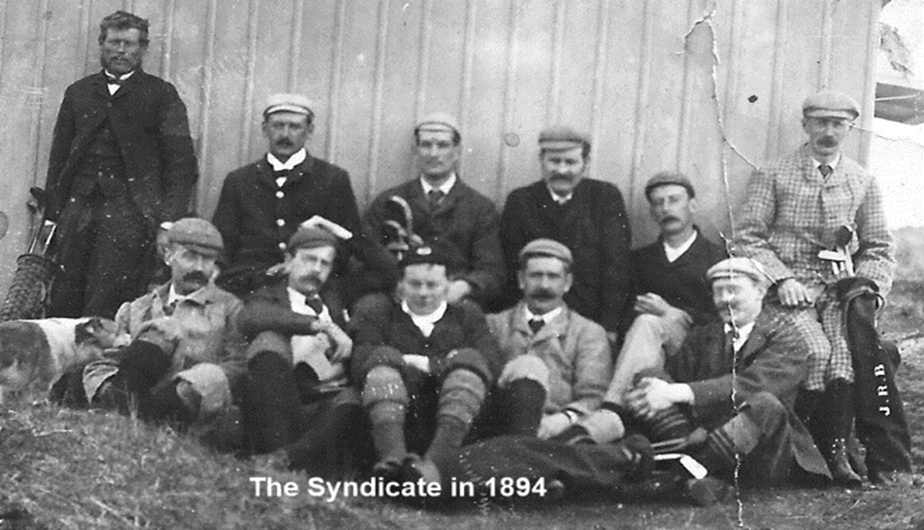
Law, Bristow and Ferguson were from Belfast and came to Dublin to work for the Northern Bank, Bristow later becoming its chairman. Stewart hailed from Derry and was a barrister. Wilson, born in Limerick, was also a barrister; he was later to become Chief Justice and stood for election to the Westminster Parliament. Daly was a solicitor and became High Sheriff for Co. Louth and later served as Hon. Secretary of the GUI. Moore and Hayes, both from Dublin, were solicitors. The only members with non-legal or non-banking backgrounds were Barrington, who had a large soap business in Dublin, and Blood, who owned Mountjoy Brewery in Russell Street, Dublin. As time passed and members of the original Syndicate died, they were replaced by others. This continued until the modern era of the club was shaped in 1952 when the members of the Syndicate generously gifted their entire interest in the club to the associate members, who now became the new full members and owners of The Island Golf Club.
The Boat Man
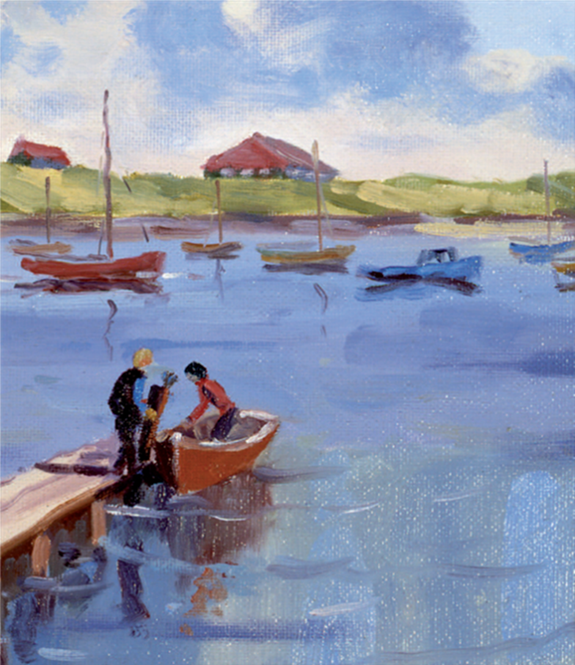
Long before automobiles and bridges, the only way to get out to play the course was by boat--the last leg of the journey to play golf at The Island. There are many stories about the boat, the boatmen, the order of embarkation and the priority thereof. When the boat took a golf party to The Island, they were entirely dependent upon the boat for the return journey. The signal to the boatman on the far side of the estuary to collect golfers from the links was to open a large red and white disc on the side of the pavilion. The disc was hinged in the centre and could be seen from the shore by the boatman. When the disc was in the closed position it was green in colour and blended in with the wall of the pavilion.
Course Review:
Our driver from the previous day at Portmarnock was James, who amongst other things --like importing Italian wines--just happened to be a member of The Island. As we approached the harbor in Malahyde, we came to a red light, and he asked me.
“Are you wearing your GPS golf watch, Red?"
” Yes, but I am not dialed in now.”
“If you look across the water,” pointing across the harbor, he continued, “past that white boat, see the light green patch jutting out on the right?”
“I do, is that the course?” I asked.
“Yes, that is number 14 tee, a par four. I calculated it once. From right where we are sitting, it is about 664 yards to the green. So, that puts the carry over the bay at three hundred yards.”
As Scooter and I played the hole four hours later, I checked the score card and it was indeed 364 yards from the white tees.
“That is where the boat used to drop off the golfers, long before cars and before the bridge came about,” he grinned.
It would be another fifteen minutes around the bay and over the bridge till we arrived at the course. It is not an Island in the true sense of the definition, as it is connected to land at the Northern most tip, but it sure seems like one when you are on the course—surrounded by the Bay and/or Bog on three sides.
I thought to myself, Boat…Really? Those golfers must have been extremely dedicated. But then again, let your mind wander back 135 years. How much fun would that be?
The other creative side to me thought, what a great idea for a fund-raiser. Get a few big hitters there and go after it! Play it as a par-5, across Malahyde Bay. I can just picture the side bets coming in all over town.
Then get about ten boats, charge each golfer $150 each to play 14 through 18, have a cocktail on the patio, them cart them back to #14 tee for the return. I think it could generate a good amount of money for the local charities.
My mind wandered back to early last century--horse & buggy to Malahyde from wherever you live in the Dublin area. Flag the boatsmen, and off you go. Five hours later, he returns to pick you up after a rousing round of golf, with five clubs, and a handful of featheries. The boat man greeted you with a wee dram. Could you imagine? That must have been an all-day excursion back in the day. It remained that way until the bridge came into play in 1973.
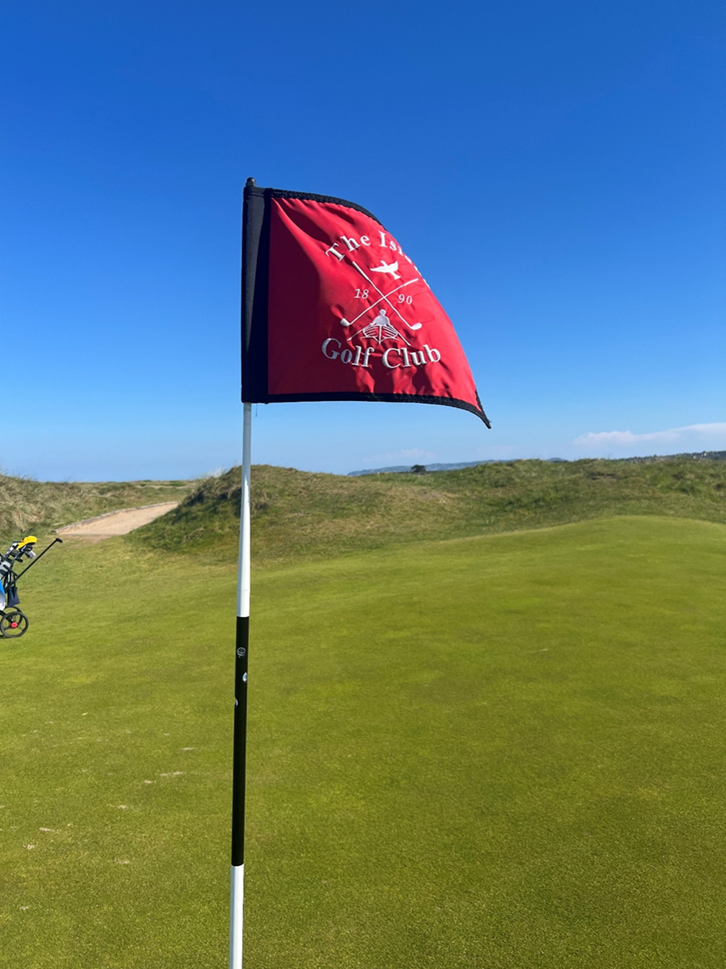
I say this with the utmost confidence and with a smile on my face. The Island is the one club that I cannot wait to return to on every Irish trip we take. Fly into Dublin, get our bags, and rental car, and head straight to the course. Breakfast in the dining room, hit a few balls, then off we go.
The club is a wonderful setting. It has a great practice range and it is a par-72 course, but It is a unique in that it has only one par 3 and 5 on the front.
A la Gil Hanse and his comments printed on the tees at Cabot Castle Stuart--included within the gift bag on the first tee--this is how I described The Island in my notes:
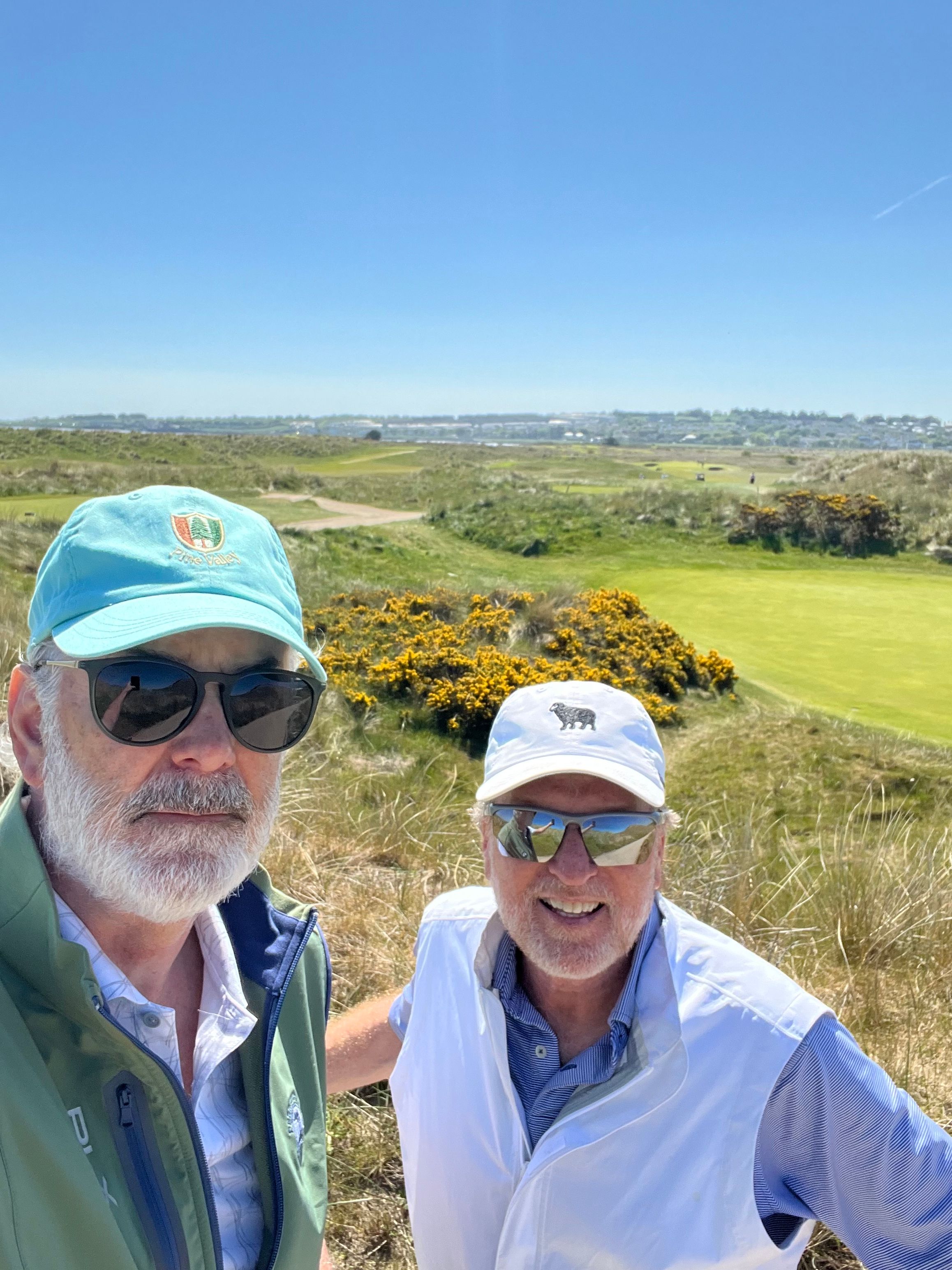
This would be one of only a handful of rounds that Scooter and I played by ourselves, no caddies, no playing partners and an early afternoon tee time, on a bright, sunny day. We knew what we were in for from the first tee. Off into the dunes land, towering, beautiful dunes. Just like the Boat Man back in the day, it seemed like we were embarking upon a journey into the past. Old school, just the two of us and our trollies.
Continuing with my tradition of applying a band and/or song to the golf course. How would I identify The Island? That is an easy one. I had the song Listen to the Music, by The Doobie Brothers in my head, as we wound our way through the beautiful, high dunes, and walked down the tee to the 2nd Fairway (Caul’s View).
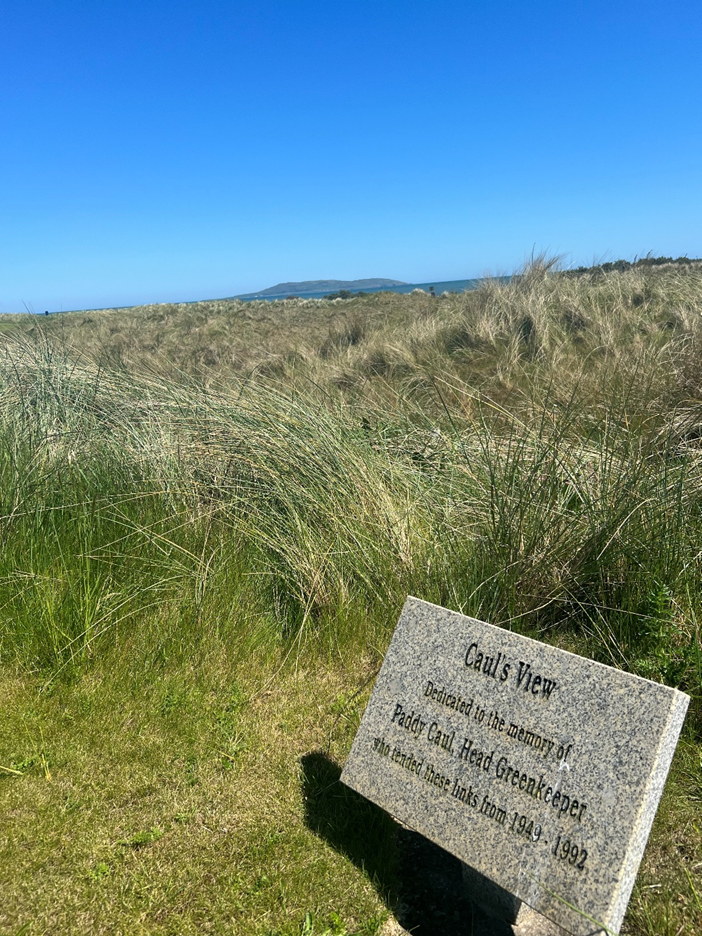
It was a bright, sunny, wonderful day, just like the song makes me feel—Tom Johnston’s happy-go-lucky melodies along to the ringing guitar rhythms, just like a lazy flowing river:
Don't you feel it growing day by day?
People getting ready for the new
Some are happy, some are sad
Whoa, we gotta let the music play
Mm-hm
What the people need is a way to make 'em smile
It ain't so hard to do if you know how
Gotta get a message, get it on through
Oh, now, mama is goin' to after a while
Whoa-oh-whoa, listen to the music
Whoa-oh-whoa, listen to the music
Whoa-oh-whoa, listen to the music
All the time
Well, I know you know better
Everything I say
Meet me in the country for a day
We'll be happy and we will dance
Feeling good, feeling fine
Oh, baby, let the music play

The first was not just a gentle handshake, but also a proper introduction to the dunes. The approach goes through dunes framing both sides of the fairway and green. Sink your putt, then it is up the hill to the gorgeous, elevated tee for the par-four second. This is the aha moment with the panoramic views to Lambay Island behind you, and around the Bog to the Bay and Malahyde in the distance, and the Clubhouse back to your right.
One thing all golfers like to do is to pick a favorite nine for every course they play. This is a difficult, tall task at The Island, which speaks volumes as to how cool the course really is. I cannot honestly answer that question.
The front has holes two through four—#2 a wonderful par-3 dubbed Lambay, named after the Island in the distance—and six through eight (all par-4s named Desert, Ridge and Tower) that are fantastic stretches of holes, meandering through wonderful dunes that makes you feel great that you are in Ireland!
Ridge, #7 is one of my favorites. A fun short par-4 with large dunes lining the fairway off your drive, the fairway bending left around a giant dune that creates a blind-approach shot if you do not keep your drive right—which I did and paid for it! It has a beautiful amphitheater-like green complex, open only middle front—at 6 o’clock to the right rear, 2 o’clock. One of my four favorites.
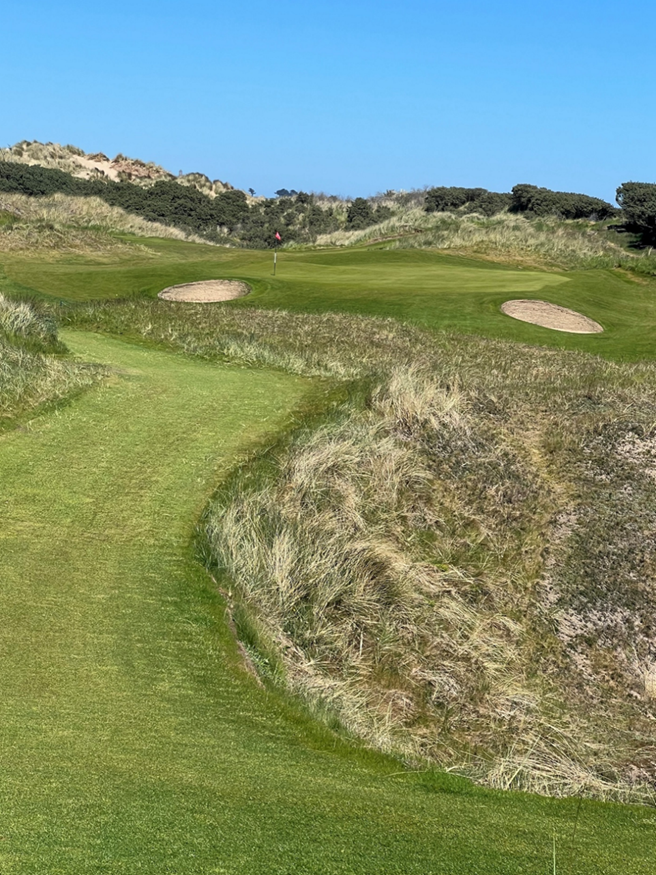
Twelve, Valhalla, is a wonderfully designed hole, again parallel to Eleven, back toward a green complex along the bay. A long rollercoaster fairway, with an uphill approach to a plateau-like green, with no bunkers. It is framed nicely by a dune on the left. Any short approaches will kick back down the hill or right into a grassy dungeon.
Thirteen, Broadmeadow, is a fantastic par-3, 208 yards heading out to the Bay, looking like its own little peninsula with sailboats, Malahyde and the Church steeple in the distance. It is a long carry, and your miss is left or long, to a fair, relatively flat green.
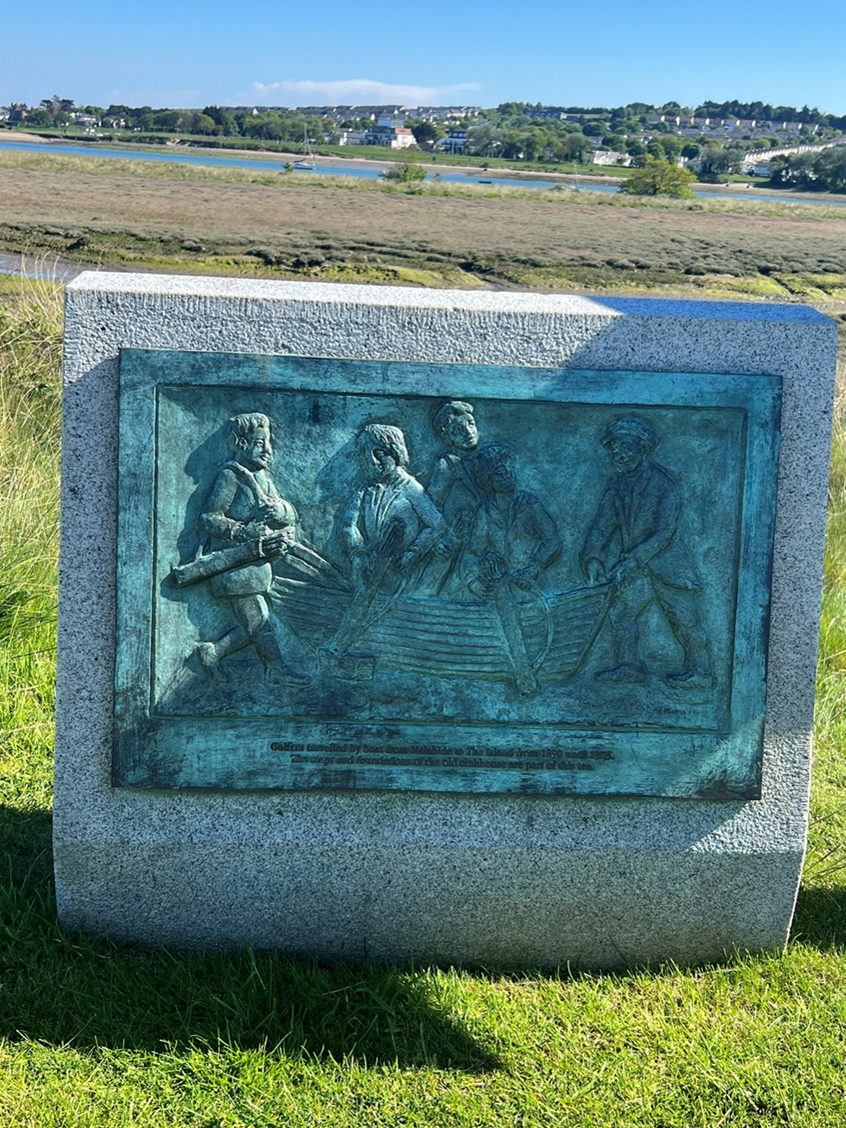
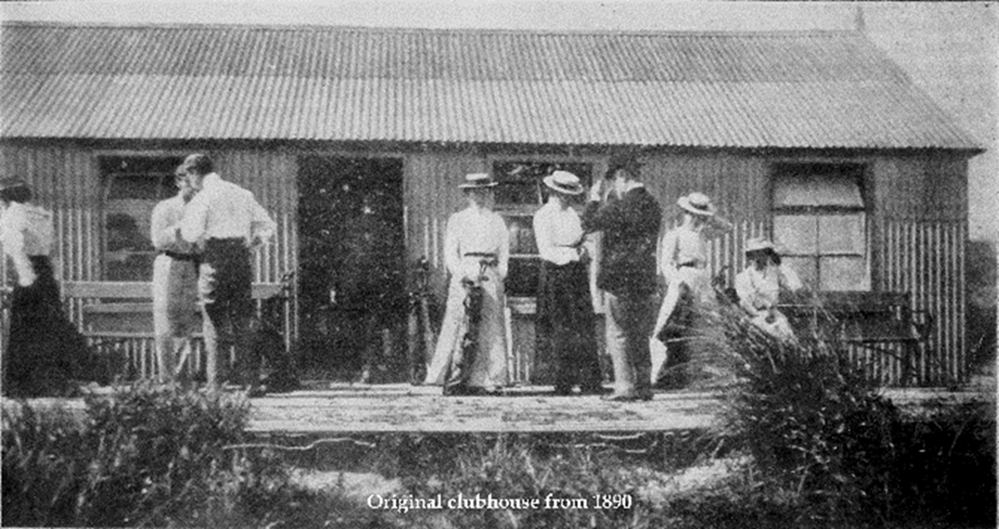
Then you hit the famous 14-tee, Old Clubhouse, where the boatman used to drop people off for their round. Its fairway is known as the narrowest in all Irish golf. There is nowhere to miss right, and heavy gorse on the left—I absolutely love this hole! It makes you pucker a bit when you are on the tee. Nowhere to miss!
Then #15 (Prairie), a great par-5 and my favorite on the course. A gorgeous view back northeast from the tee to a blind landing area.
As you turn back Northeast on #17, (Ireland’s Eye) you get one last glimpse to the Northeast pointing directly at the famous Island and play a classic par-4 before turning left, back into the clubhouse.
As we headed up #18 fairway, toward the Clubhouse on the right, I felt downright giddy. What a joy of a course to play, and an Irish gem that is still off the radar. James joined us on the veranda, overlooking number eighteen to relax before the drive, and get our thoughts on the round. You could sense that he was a proud member of The Island and wanted everyone to enjoy its wonderful canvas.
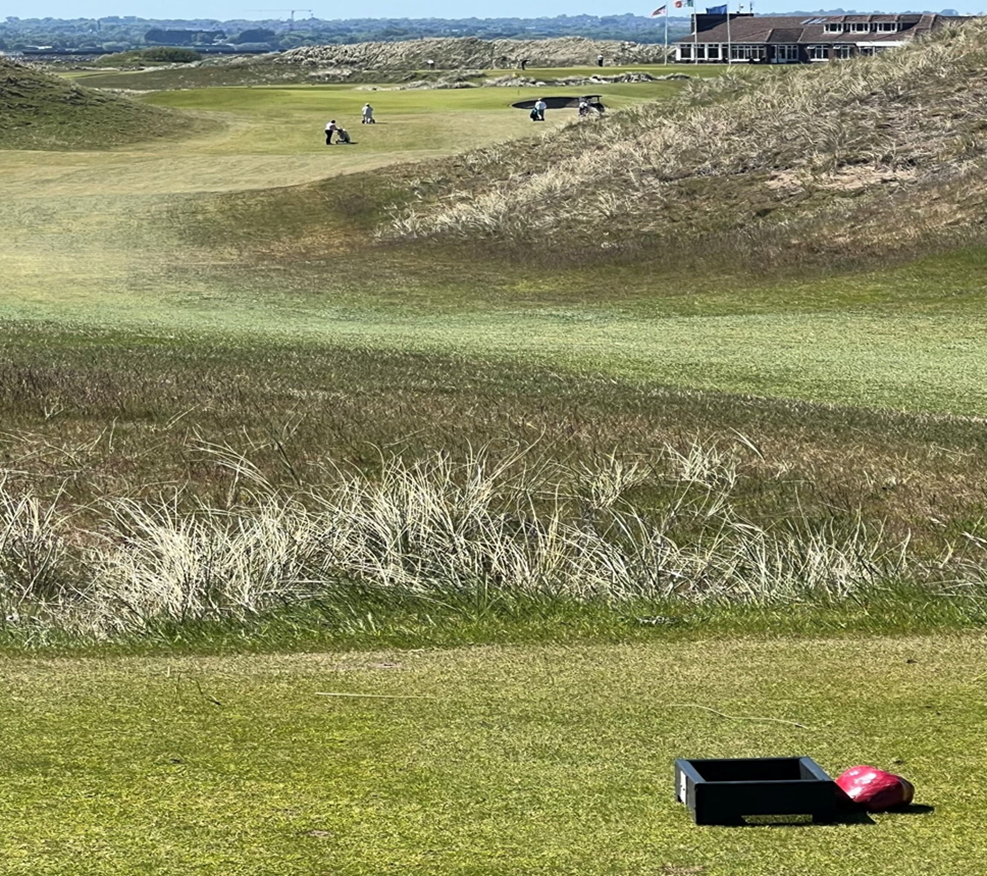
As Scooter and I sipped our Guinness’s on the outside patio, we watched as youngsters both with and without parents tuning up for a late afternoon round. I look forward to the day that we hear about a young member of The Island—either lad or lass--making it to the bigtime. It might even be James’ son.
As we were heading out to his van, we noticed a foursome of golfers that had been waiting since we finished our round. Seems as if it is an out-of-the-way drive around the horn to The Island, and they experienced a couple ‘no shows’ to get horn. When James suggested, we gladly agreed to have them join us on the ride back as they were at a hotel in Malahyde on our way to the Portmarnock -Jameson.
As we arrived back and unloaded, it was a wonderful story of when you give and it comes back to you. James let us know that the group of guys had paid our fare.
One of the stories that James regaled us in on the way back stuck in my mind for days afterward. How do you pull the perfect pint of Guinness?
Well, as he explained in detail. It is a combination of:
Did the bartender “pull” the Guinness (Pour it) correctly, as to create that perfect 1/2 to 1” of foam? How long was the first pull, vs. the second?
Only the most experienced Bar Keeps know!

It was our first introduction to the large, high dunes of Ireland, and we were amazed. We thoroughly enjoyed The Island Golf Club, and it instantly became one of my favorites that I look forward to playing anytime my travels take me to Dublin. That said, the off-course fun was almost equal to on-course and it would not have been half as fun if it were not for James our guide and confidant.
Course Rating: is a resounding Birdie!

Old Tam in Shorts, it was a warm day in May

View across the bay to Malahyde
— COURSES —
More incredible links courses from Ireland
Eddie Hackett & Daniel Steele
A wonderful links course in County Sligo, on the Atlantic Ocean. It has the tallest, most wonderful dunes in all of Ireland

Pat Ruddy
The masterpiece of designer Pat Ruddy. A wonderful, brutal modern links course with wonderful views of Brittas Bay on almost every hole. A very stern test for golfers at every level

Harry Colt
A modern-day host on the Open Rota, Royal Portrush is a top-20 course in the World. An absolute must to play. Both challenging and beautiful, with gorgeous views and a great walk. It was named after the Dunluce Castle just down the beach where The Lords of Antrim lived centuries ago.